Introduction
Modern technology has introduced new risks that traditional insurance policies were never originally designed to handle. Devices like drones, once considered toys, are now powerful tools capable of causing real damage.
This real-life inspired case from Texas shows how a simple recreational activity turned into a legal and insurance dilemma—and how policy interpretation played a crucial role in the final outcome.
Quick Facts
- Type of Insurance: Homeowners Insurance (Personal Liability)
- Location: Texas, USA
- Main Incident: Drone damage to a parked vehicle
- Claim Amount: Approximately $2,000
- Key Issue: “Aircraft” exclusion clause
- Outcome: Claim approved after legal interpretation
Understanding Personal Liability Coverage
Personal liability coverage is part of most homeowners insurance policies. It protects policyholders when they accidentally cause damage to someone else’s property or injure another person.
This protection often extends beyond the home, covering incidents that occur in public places.
However, coverage is always subject to exclusions written in the policy—some of which may not clearly apply to modern technologies.
The Real Story
In a quiet suburb in Texas, a father and his teenage son shared a passion for technology and gadgets.
To reward his son’s academic success, the father bought him a recreational drone. They used it responsibly, flying it in a large public park designated for such activities.
Everything seemed safe—until one unexpected moment changed everything.
The Accident
On a sunny afternoon, the drone was flying smoothly when it suddenly lost signal for a few seconds.
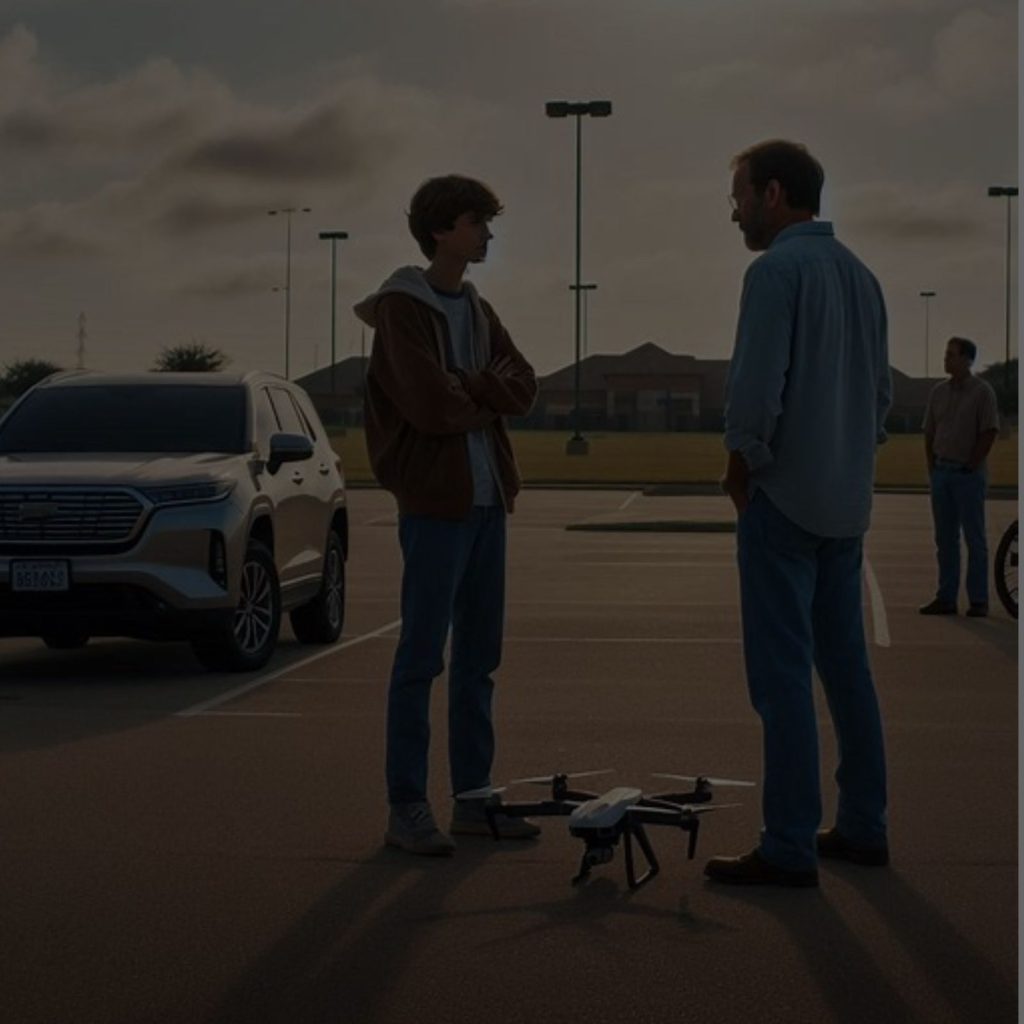
A light gust of wind pushed it off course. Before control could be restored, the drone drifted into a nearby parking lot and struck a parked car.
The impact caused a noticeable dent and deep scratch on the vehicle.
The father took responsibility immediately, waited for the car owner, and later discovered the damaged vehicle belonged to a neighbor.
The Cost Dilemma
The repair estimate came to around $2,000.
Confident in his homeowners insurance, the father filed a claim expecting the damage to be covered under personal liability protection.
However, the insurer did not respond as expected.
The Insurance Company’s Position
The insurance company pointed to a specific clause in the policy:
Damage caused by “aircraft” is excluded from coverage.
The adjuster argued that the drone could be considered an aircraft under this definition.
This created uncertainty about whether the claim was valid.
Legal Insight: Policy Ambiguity
The father challenged this interpretation, arguing that the policy was written long before drones became common and that the term “aircraft” referred to manned vehicles such as planes or helicopters.
This situation introduced a key legal principle in insurance law:
Any ambiguity in an insurance contract is interpreted in favor of the policyholder.
This rule exists because insurance policies are drafted by insurers, and unclear language should not disadvantage the customer.
The Resolution
After internal review and legal consultation, the insurance company agreed that the policy language was ambiguous.
Because the term “aircraft” did not clearly include drones, the insurer decided to approve the claim.
The full cost of repairing the neighbor’s car was covered.
The father avoided a significant financial burden, and the relationship with his neighbor remained positive.
Why This Matters
This case highlights how rapidly evolving technology can expose gaps in traditional insurance policies.
Devices like drones, e-scooters, and smart equipment may not be clearly addressed in older contracts.
Understanding how policy language is interpreted can make a major difference in claim outcomes.
Could This Happen to You?
Yes. As technology becomes more integrated into daily life, similar situations are becoming more common.
Examples include:
- Drone accidents causing property damage
- E-scooter incidents involving pedestrians
- Smart devices malfunctioning and causing harm
Without clear coverage, these incidents can lead to unexpected financial responsibility.
Common Mistakes to Avoid
| Mistake | Solution |
|---|---|
| Assuming new technology is automatically covered | Confirm coverage with your insurer |
| Accepting initial claim denial | Review policy language carefully |
| Ignoring exclusions | Understand all policy limitations |
| Not documenting incidents | Keep detailed records and photos |
Practical Advice
- Ask your insurer about coverage for drones and similar devices
- Always operate technology within legal and safety guidelines
- Keep proof of responsible usage
- Challenge unclear claim denials when necessary
- Consider specialized insurance for high-risk devices
Awareness Section
Before using modern devices like drones, ask these important questions:
- Does my policy cover this type of device?
- Are there exclusions that might apply?
- Should I purchase additional coverage?
Being proactive can help prevent unexpected claim disputes.
FAQ
Q: Are drones considered aircraft in insurance policies?
A: It depends on the policy wording. Some policies may include them, others may not.
Q: Can homeowners insurance cover drone accidents?
A: Yes, in some cases under personal liability, unless specifically excluded.
Q: What should I do if my claim is denied?
A: Review the policy and consider challenging the decision if the wording is unclear.
Disclaimer
This article is for informational purposes only and does not constitute legal or financial advice.
Conclusion
This case demonstrates how insurance policies must adapt to modern technology.
Understanding your coverage, questioning unclear clauses, and staying informed are essential steps to protect yourself in an increasingly complex world.
Sources
- Insurance Information Institute – Drone risks and insurance
- Forbes Advisor – Drone insurance insights
- Allstate – Homeowners insurance and drones
Author
Written by Carla – Content writer focused on insurance and financial protection topics in the United States.
Website managed by Hicham Asouab, founder of True Insurance Stories.