
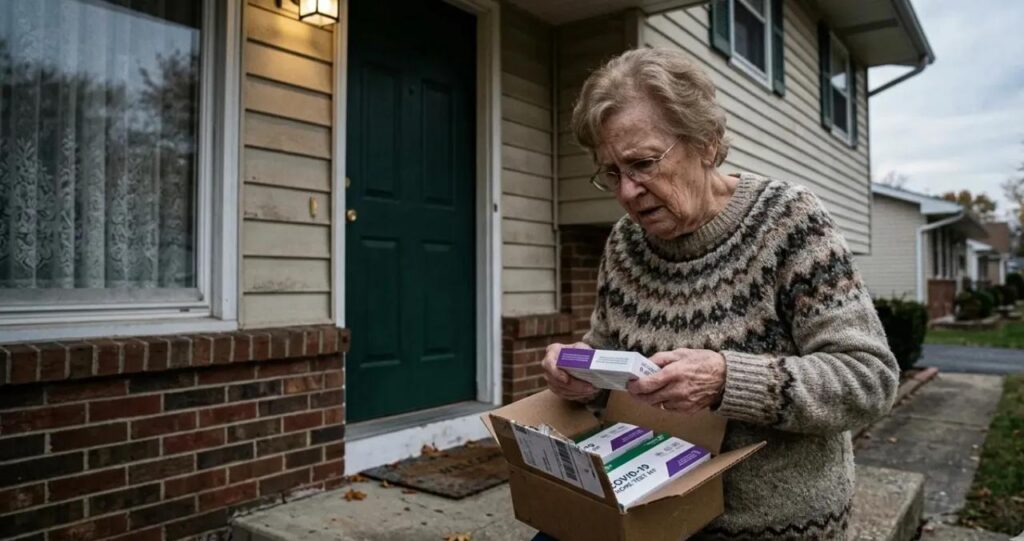
The $2 Billion Medicare Scam: The Mystery Boxes That Exposed a Nationwide Fraud
The Mystery Box on the Porch
"
The Mechanics of the "Crisis Churn"
The COVID-19 fraud scheme represented a new era of industrialized identity harvesting, leveraging global networks and emergency healthcare systems.
The Lead Generation Web:
The fraud began with international call centers posing as official health representatives, targeting seniors with offers of free services.
- The Trap: Victims were promised free tests or consultations under false government programs.
- The Harvest: Once Medicare details were collected, identities became valuable assets for large-scale billing fraud.
The "Special Senders" Infrastructure:
After identity theft, fraudulent labs generated orders and shipped low-cost items to create a false audit trail while billing for high-value services.
- Shell Labs: Fake or dormant labs were used to process claims.
- High-Velocity Billing: Claims were submitted rapidly under relaxed pandemic regulations to secure payment before detection.
How the System Was Exploited
The Waiver Vulnerability:
Emergency healthcare policies reduced verification requirements, allowing faster access to care but also opening pathways for fraud.
The "Pay and Chase" Velocity:
High claim volumes overwhelmed oversight systems, enabling fraudsters to exploit delays between payment and audit.
How Insurance Companies and Authorities Detected the Fraud
Data Pattern Recognition:
Insurers and federal agencies identified abnormal billing spikes linked to COVID-19 testing services that did not match patient behavior.
Telematics & Claim Analysis:
Repeated billing under the same identities, combined with shipping records of low-cost kits, exposed inconsistencies between services billed and services delivered.
Whistleblower Signals:
Reports from inside laboratories and patient complaints triggered deeper federal investigations.
Academic and Technical Analysis: Data Mining vs. The Virus
Technical Analysis (AI & Graph Models):
Fraud detection now relies on graph analysis and machine learning to identify abnormal relationships and rapid billing spikes.
- Graph Modeling: Fraudulent networks show centralized referral patterns unlike legitimate decentralized systems.
- Anomaly Detection: AI models flag sudden growth in billing activity that exceeds normal operational limits.
Psychological Analysis:
Fraudsters exploited crisis-driven fear and urgency, using scarcity messaging and authority signals to gain trust and compliance.
The Strike Force and the False Claims Act
Federal Enforcement:
Large-scale investigations led to multiple arrests and billions in fraud charges.
The False Claims Act:
Whistleblowers and legal frameworks played a critical role in identifying and prosecuting fraudulent operations.
Frequently Asked Questions (FAQ)
Q: I received a test kit I didn't order. What should I do?
Report the issue immediately to Medicare and review your billing statements for unauthorized charges.
Q: Does this fraud affect my healthcare coverage?
Yes. Fraudulent claims can impact your benefit limits and potentially interfere with legitimate future care.
Q: How large were the losses?
Pandemic-related fraud is estimated in the hundreds of billions, with healthcare lab fraud accounting for billions of dollars.
The "Tax" on Public Trust
The COVID-19 fraud scheme demonstrated how emergency systems can be exploited at scale. Financial losses directly impact healthcare resources and public trust.
Future protection requires stronger identity verification and real-time monitoring to prevent misuse of healthcare systems.
Reliable Sources & Academic References
- U.S. Department of Justice: National Enforcement Action Involving Over $2.5 Billion in Fraud
- HHS Office of Inspector General: Consumer Alert: COVID-19 Laboratory Fraud
- Journal of Clinical Oncology: Wong (2012) - Financial Incentives in Healthcare
- AI Magazine: Liu et al. (2016) - Graph Analysis for Fraud Detection
- Journal of Elder Abuse & Neglect: Shao et al. (2019) - Vulnerability to Fraud
- The Review of Economics and Statistics: Leder-Luis (2023) - Whistleblowers and Public Fraud



Pingback: LIRR Disability Insurance Fraud: Inside the $1 Billion Scandal