
Commercial Property Insurance: How Food Spoilage Claims Are Verified via IoT Sensor Data
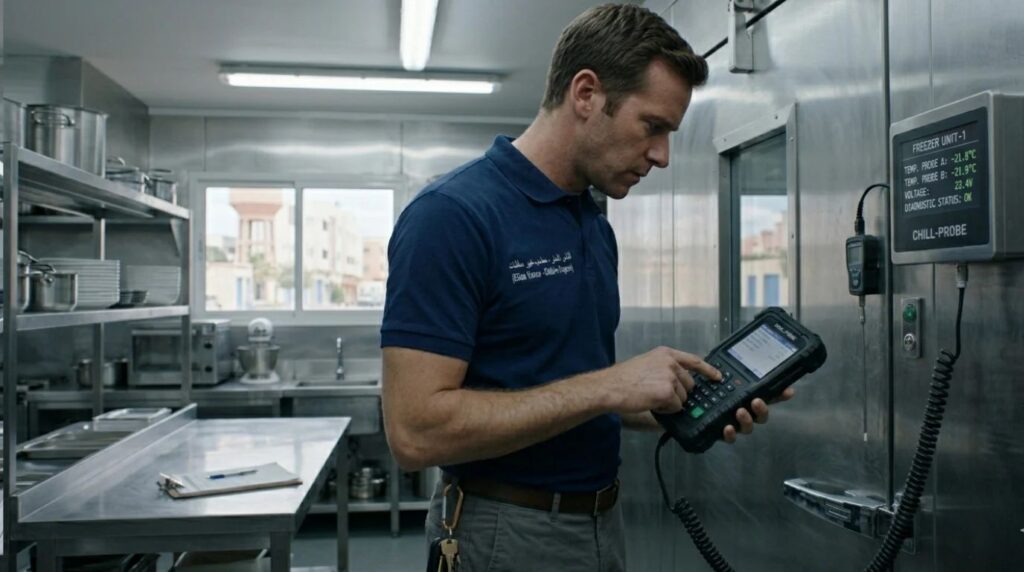
Evaluating commercial property damage claims within the food service industry requires careful verification of physical inventory, local utility grid stability, and internal equipment metrics. When a restaurant operator reports a total loss of high-value perishable stock due to an alleged sudden refrigeration failure, insurance adjusters must investigate the precise mechanical timeline of the containment units. Processing a commercial property insurance claim for food spoilage has become increasingly objective, as connected internet-of-things (IoT) temperature sensors and smart cooling controllers provide an independent, unalterable log of mechanical storage environments.
Reported Power Failure and Bulk Food Spoilage
A high-end steakhouse in Chicago was experiencing a severe decline in monthly customer revenue following consecutive quarters of high inflation and increased supply chain costs for premium meat cuts. Facing an overstock of expensive, unsold dry-aged beef and seafood approaching their safety expiration limits, the business owner attempted to liquidate the inventory through an insurance reimbursement. His objective was to secure a $28,000 payout under his commercial property policy’s food spoilage endorsement.
On a Sunday evening when the restaurant was closed to the public, the owner entered the rear kitchen area alone. Instead of disconnecting the main power supply to the building, which would have alerted the external utility provider, he manually bypassed the secondary digital temperature controls on the primary walk-in freezer and propped the heavy insulated door open by several inches using a wooden crate. He left the facility overnight, allowing the warm summer air to raise the interior temperature and spoil the meat products. The following morning, he filed an official claim stating that an unexpected electrical fault inside the kitchen walls had disabled the freezer units over the weekend, resulting in an unrecoverable loss of inventory.
Reviewing Smart Freezer Access Logs
Why Was the Food Spoilage Claim Audited?
The specialized commercial lines adjuster noted immediate technical contradictions during the physical inspection of the kitchen. While the meat inventory was thoroughly spoiled, the auxiliary digital control panels, digital registers, and kitchen lighting systems were fully functional and showed no signs of power surges or localized circuit breaker trips. Additionally, a regional query sent to the municipal electric utility confirmed that grid power to the commercial block had remained completely constant and uninterrupted throughout the weekend.
The restaurant owner assumed that because the physical meat stock was clearly unusable and presented an immediate biological hazard, the insurance company would simply accept the explanation of an internal appliance malfunction and issue the check without conducting a digital forensic audit of the refrigeration machinery.
How Was the Fraud Discovered?
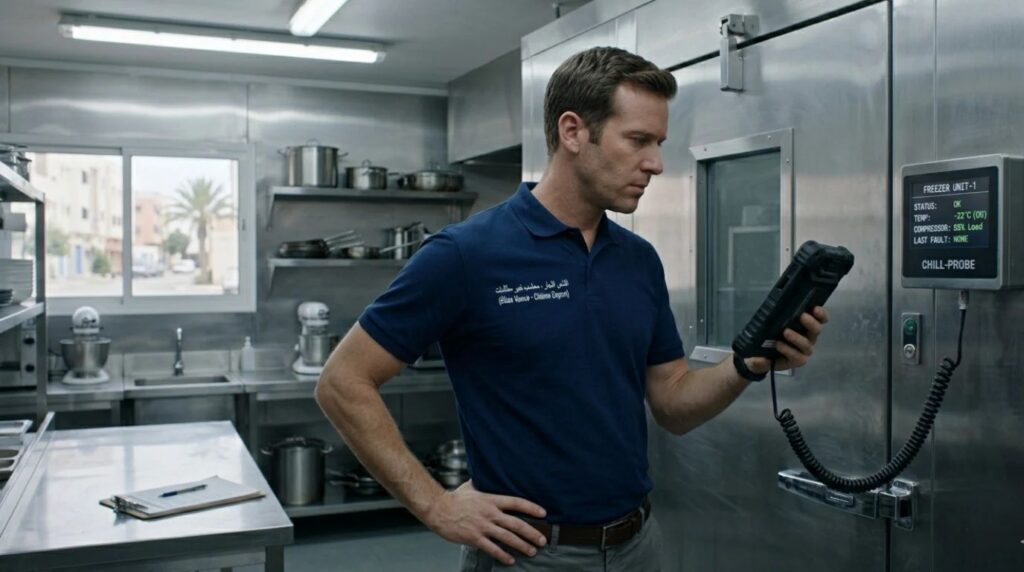
The insurance company’s special investigations team requested the encrypted historical logs from the commercial freezer’s integrated **IoT Smart Controller**. Modern commercial refrigeration systems utilize built-in internet-connected modules that continuously upload interior temperatures, compressor duty cycles, and door-latch sensor data to a secure off-site cloud network.
The extracted data report provided an indisputable timeline that refuted the owner’s insurance statement. The internal telemetry showed that the freezer’s electrical compressor was running at maximum capacity attempting to cool the unit, proving that power was never lost. Furthermore, the built-in proximity switch logs recorded that the heavy main door was opened manually on Sunday evening and remained unlatched for twelve consecutive hours, causing the temperature to rise steadily from 0 degrees Fahrenheit to 72 degrees. This systematic method of verifying asset history is standard operating procedure; just as fine art surveyors evaluate environmental logs during a fine art insurance property investigation involving gallery data loggers, commercial property adjusters use mechanical telemetry to confirm refrigeration losses.
Commercial Refrigeration Systems Engineer Insight: “Commercial walk-in freezers record every mechanical variable. When cloud metrics show that the electric compressor was consuming maximum power while the door switch was registered as open for twelve hours, it proves the equipment didn’t fail; the cold air was simply allowed to escape manually.”
IoT Metrology and Commercial Risk Management
Analyzing perishable asset losses requires an understanding of cold chain metrology and behavioral risk trends in small businesses:
- The Technical Veracity of Connected Commercial Sensors: Research published in the Journal of Food Logistics & Sensor Technology confirms that encrypted IoT cooling sensors provide immutable evidence in liability cases, as the hardware level logs utilize unique cryptographic signatures that detect any external data manipulation.
- Moral Hazard in High-Cost Hospitality Sectors: A financial study from the Commercial Underwriting Research Quarterly indicates that food spoilage fraud attempts scale predictably during local economic downturns, as operators attempt to offset high fixed inventory costs through commercial policy liquidations.
Policy Forfeiture and Regulatory Compliance
How Does the Law Apply?
Commercial general liability and property policies require strict administrative honesty during loss assessments. Under the standard **Concealment, Fraud, or Intentional Misrepresentation Provision**, any deliberate act to induce asset spoilage or falsify equipment data completely voids the active policy. The underwriting company is legally permitted to deny the current claim in its entirety and terminate all secondary coverages associated with the business entity.
The restaurateur’s claim was formally denied, his commercial insurance package was canceled, and the business was forced to shut down permanently due to the immediate loss of liability protection. The underwriter referred the case file to the state insurance department, leading to criminal indictments for commercial fraud and grand theft. This structural legal response is consistent across all specialized underwriting lines when misrepresentation is discovered. Whether an individual is hiding high-value artwork or faking an asset loss using a wooden crate to compromise a freezer during a marine cargo insurance investigation involving maritime cold chain data loggers, the result remains unchanged: claim rejection, loss of commercial insurance rights, and direct legal prosecution.
Key Terms to Know in Food Service Insurance:
- Food Spoilage Endorsement: An optional commercial policy addition that covers the cost of replacing perishable food items lost due to accidental mechanical breakdown or power failure beyond the business’s control.
- Protective Maintenance Clause: A contractual rule requiring the business owner to maintain all commercial equipment in proper working order and adhere to standard industrial safety protocols to ensure policy validity.
Questions (FAQs)
1. Does standard business property insurance cover food spoilage automatically?
No. Standard commercial property insurance usually covers structural damage from events like fire or windstorms. Replacing spoiled food items requires a specific “Food Spoilage Endorsement” or an inland marine floater designed for perishable goods.
2. Can an insurance company deny a spoilage claim if the restaurant’s internet was down?
While an internet outage might delay cloud syncing, modern commercial smart controllers store backup data logs on internal, non-volatile memory chips. Investigators can retrieve these files directly from the equipment during an on-site audit.
3. What happens if a food spoilage event is caused by a real city-wide power outage?
If a widespread utility grid failure occurs, the claim is fully approved. Investigators will verify the event using public utility logs and regional weather data, confirming that the electrical blackout was completely external and accidental.
Conclusion
Operating a commercial food service business requires strict operational compliance and transparent cooperation with your underwriting providers. The telemetry logs analyzed in this restaurant freezer case demonstrate that modern IoT sensory technology makes faking an accidental refrigeration loss highly impractical. Attempting to manage operational debts by deliberately spoiling inventory leads directly to policy voidance and criminal charges. Utilizing certified temperature alarms and maintaining honest commercial property insurance practices is the only reliable way to protect your business assets and your commercial future.

Pingback: Commercial Property Insurance: Medical Machinery System Logs Case Study
Pingback: Commercial Property Insurance: Solar Array Telemetry Case Study
Pingback: Commercial Property Insurance: Warehouse Water Damage Case Study