Commercial Property Insurance: How System Event Logs Verify Medical Equipment Claims
Evaluating specialized property claims involving high-value medical diagnostic machinery requires an advanced review of cyber infrastructure, physical facility maintenance, and internal hardware metrics. When a medical facility reports a total loss of an MRI or CT scanning unit due to an alleged external network breach or system anomaly, insurance adjusters must audit the equipment’s internal logs. Processing a commercial property insurance claim for complex medical infrastructure has become highly forensic today, as non-volatile system event logs and offline hardware metrics provide an independent, cryptographic timeline of machinery operations.
Reported Cyber Attack and Diagnostic Machinery Failure
A private diagnostic clinic in Texas was facing severe operational deficits due to an over-saturation of local medical services and high monthly leasing costs for premium radiological equipment. Looking to exit the restrictive equipment lease and recover capital, the clinic management decided to simulate a catastrophic hardware failure. Their goal was to secure a $145,000 total-loss reimbursement under the equipment breakdown and electronic asset riders of their commercial insurance package.
The owner spent several days research engineering specifications for cryogenic and water-cooling loops in specialized scanners. During a holiday weekend when the clinic was empty, he bypassed the building’s secondary ventilation circuits and manually shut off the external water-chilling valves that regulate the scanner’s internal magnets. To make the physical damage look like an external cyber attack, he executed a basic script on the facility’s local network to display a fake ransomware lock screen on the clinic’s front computers. He then kept the scanner powered on until the internal coils overheated and experienced systemic thermal failure. The following Monday, he filed an official property claim, stating that hackers compromised the network, locked the cooling controls remotely, and intentionally melted the system hardware.
Auditing Onboard Non-Volatile Memory
Why Was the Medical Machinery Claim Audited?
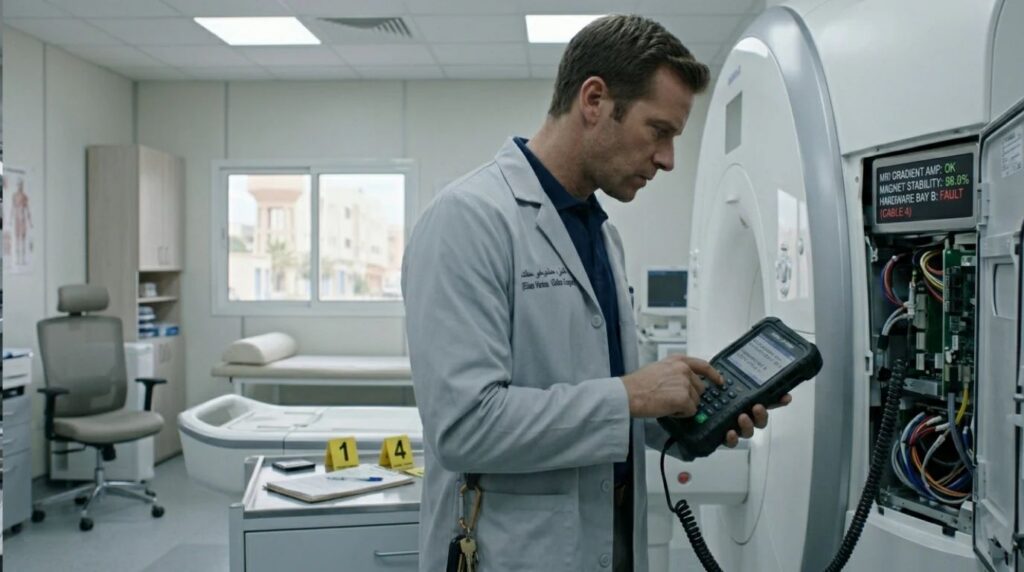
The specialized medical technology surveyor noted immediate inconsistencies during the initial technical assessment of the clinic’s server room. While the front office computers displayed a standard ransom graphic, the primary network firewalls, active database servers, and encrypted patient records showed no signs of data encryption, unauthorized remote access logs, or external data packets. Furthermore, a physical inspection of the scanning machine revealed that the main external coolant flow valve was completely closed and locked with a physical pad from the inside of the maintenance room.
The clinic owner assumed that because the scanning machinery was completely inoperable and the front computer screen showed a cyber threat message, the insurer would simply attribute the loss to a cyber-physical attack and issue the payment without extracting data directly from the internal hardware drive of the machine.
How Was the Fraud Discovered?
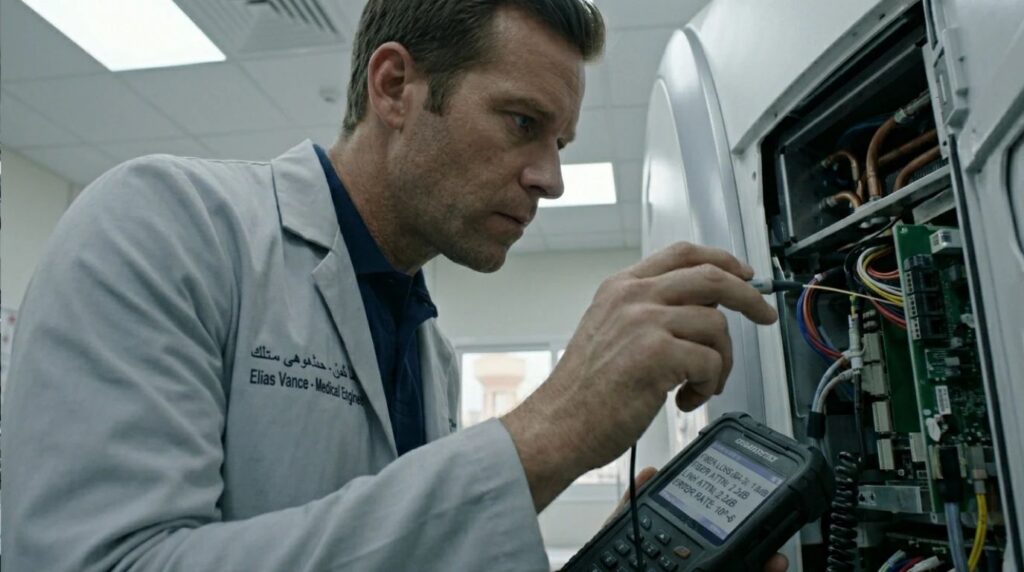
The insurance company’s digital forensics team extracted the hard drive from the scanning machine’s proprietary **Internal Diagnostic Module**. High-end medical machinery contains an isolated, non-volatile memory system that operates independently of the clinic’s public local area network (LAN) and records basic engineering parameters directly from physical hardware sensors.
The extracted system event logs provided clear technical evidence that refuted the cyber narrative. The internal logs proved that the cooling failure began with a manual, physical manipulation of the coolant valves inside the building. The data clocks showed the internal temperature sensors began rising while the digital network commands were entirely normal, proving the fake ransomware note was deployed hours after the hardware was already damaged. This methodical checking of physical asset metrics is standard protocol; just as property adjusters review smart freezer controller files during a commercial property insurance food spoilage investigation involving restaurant IoT sensors, specialized adjusters use internal diagnostic modules to verify commercial machinery losses.Medical Systems Forensic Engineer Insight: “Onboard diagnostic drives cannot be overwritten or altered by standard network scripts. When the hardware logs show a physical drop in coolant pressure hours before any network message was generated, it mathematically refutes the narrative of a remote cyber attack.”
Hardware Forensics and Asset Risks in Healthcare
Analyzing high-value medical hardware claims requires an understanding of cyber-physical telemetry and behavioral economics in corporate healthcare:
- The Structural Veracity of Isolated Diagnostic Systems: Research published in the IEEE Journal of Biomedical and Health Informatics indicates that localized medical machine data loggers are tamper-proof legal baselines, as their system logs are hardcoded into secure memory blocks that require specific hardware keys to extract.
- Moral Hazard in Depreciating Diagnostic Technology: A financial study from the Medical Underwriting Research Journal shows that high-cost radiological assets face increased moral hazard risks when a facility experiences a drop in patient referrals, as the physical cost of technical maintenance exceeds the actual revenue generated by the scanner.
Contract Rescission and Medical Fraud Referral
How Does the Policy Apply?
Specialized commercial property and machinery policies require total transparency and absolute cooperation during an asset evaluation. Under the standard **Concealment, Fraud, or Intentional Hardening Exclusion**, any deliberate attempt to physically compromise an asset or manipulate digital system data immediately voids the insurance contract. The underwriting corporation is legally permitted to reject the current claim in its entirety and cancel all connected professional liability protections.
The medical center’s claim was formally denied, their active commercial property coverage was rescissioned, and the clinic was forced to halt all medical services due to the cancellation of their mandatory professional liability certificates. The insurer referred the forensic data files to federal law enforcement authorities, resulting in criminal indictments for corporate insurance fraud, wire fraud, and falsifying medical facility records. This legal outcome is consistent across all specialized sectors when material misrepresentation is documented. Whether an individual is manually disabling a restaurant freezer or manipulating delicate components during a complex fine art insurance property investigation involving gallery environmental loggers, the result remains unchanged: total claim rejection, loss of active policy rights, and federal prosecution.
Key Terms to Know in Specialized Equipment Underwriting:
- Equipment Breakdown Insurance: A specialized policy line that covers the sudden and accidental mechanical or electrical failure of commercial machinery, excluding wear, tear, or intentional tampering.
- Cyber-Physical Property Rider: A specific policy addition that protects physical business machinery from physical damage caused directly by a verified external digital network attack or system breach.
Questions (FAQs)
1. Does standard business property insurance cover expensive medical equipment?
No. Standard commercial property insurance has low internal sub-limits for specialized assets. High-value medical devices like MRI or CT scanners require a dedicated “Specialized Medical Equipment Floater” or an Inland Marine policy with an equipment breakdown endorsement.
2. Can an insurance company deny a diagnostic claim if the clinic’s main server was corrupted?
Yes. If the clinic’s local servers are corrupted, forensic adjusters can still extract data directly from the machine’s independent, non-volatile internal storage drive, which remains isolated from the main clinic network.
3. What happens if a medical machine is genuinely damaged by an external cyber attack?
If a real cyber attack occurs, the network security logs and external firewalls will record clear evidence of unauthorized data packets, external IP connections, and system command overrides, confirming a genuine security breach to investigators.
Conclusion
Operating a modern medical or diagnostic imaging enterprise requires strict compliance with administrative standards and total honesty with your insurance providers. The internal engineering metrics analyzed in this MRI system case demonstrate that modern medical technology makes fabricating an accidental or cyber-related loss highly impractical. Attempting to balance medical debts by intentionally damaging critical machinery leads directly to policy cancellation and criminal prosecution. Relying on certified facility engineers and maintaining honest commercial property insurance practices is the only reliable way to safeguard your clinic’s assets and your professional medical license.