
Student Loan Fraud Scheme: Inside the $11M Fake College Scam in Missouri
The Fake University That Never Educated Anyone
While millions of American students struggled under the weight of more than $1.7 trillion in student debt, a fraud network operating in Missouri discovered a loophole in the federal education system that required no classrooms, no real students, and no legitimate academic programs.
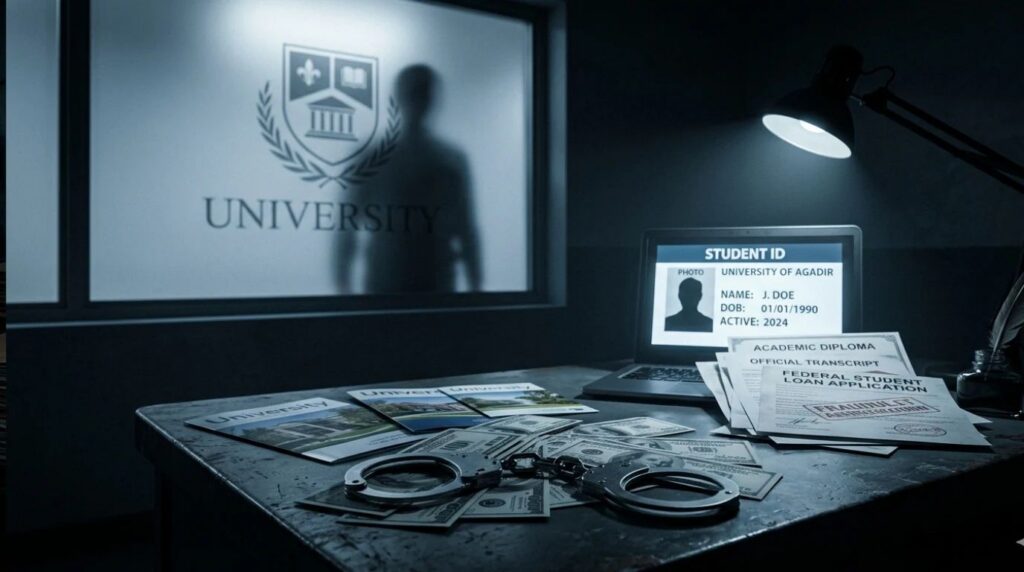
Instead of building a university, investigators say the organization created what effectively became a “financial aid factory” designed to steal millions through fake enrollments, stolen identities, and fraudulent student loan applications.
According to federal investigators, the operation — allegedly connected to Tara and Terrell Stewart — used sham educational institutions focused on information technology programs to obtain more than $11 million in federal student aid, grants, and insured student loans.
The scheme exposed major weaknesses inside America’s student aid and educational insurance systems, revealing how quickly fraudulent schools could manipulate government funding structures before triggering regulatory scrutiny.
The Anatomy of the Scam
Why Did the Fraud Happen?
From a risk-management and insurance perspective, experts describe this case as a failure of “regulatory trust architecture.” Federal student aid systems are designed to distribute educational funding quickly so legitimate students can access tuition assistance without excessive delays.
Investigators believe the fraud network exploited that speed by creating fake academic institutions and enrolling “paper students” using stolen identities, homeless individuals, and fabricated enrollment records.
- Guaranteed Financial Exposure: Federal student aid programs and insured education loans often guarantee payments to approved institutions before long-term academic verification occurs.
- Minimal Initial Verification: At the time, some systems relied heavily on Social Security numbers, digital forms, and enrollment databases without requiring substantial identity authentication or classroom participation verification.
- Low Immediate Detection Risk: Small educational institutions receiving sudden financial inflows did not always trigger immediate scrutiny, particularly in online or technical training sectors.
- The “Paper Student” Business Model: Fraud investigators later discovered that many enrolled “students” either never attended classes or did not even know loans had been opened under their identities.
How Authorities Discovered the Fraud
The investigation reportedly began after unusual financial patterns emerged across multiple federal aid transactions connected to small educational institutions.
- Abnormal Financial Activity: The Department of Education and related financial institutions noticed suspicious levels of federal funding flowing into relatively unknown schools with limited academic presence.
- Repeated IP Address Patterns: Digital forensic investigators allegedly discovered that large numbers of student aid applications originated from the same devices, internet connections, and operational locations.
- Identity Verification Failures: Investigators later matched enrolled “students” against death records and criminal databases, discovering that some individuals were deceased or incarcerated during the periods they were supposedly attending school.
- Fraudulent Enrollment Structures: Some applications reportedly contained duplicated personal data, fabricated attendance information, and manipulated educational records.
The Insurance and Financial Fallout
The case highlighted serious vulnerabilities inside the federal student aid insurance structure, where government-backed financial protections can unintentionally create opportunities for organized fraud.
Insurance analysts note that when educational funding systems prioritize rapid disbursement over layered identity verification, fraud networks can exploit the gap before risk-monitoring systems react.
Large-scale education fraud also creates long-term consequences for legitimate students by increasing scrutiny, slowing approval systems, and raising compliance costs across universities and financial aid providers.
Cases involving identity-based financial fraud have repeatedly exposed weaknesses in institutional oversight systems across the United States. Similar concerns involving systemic benefit abuse and manipulated approval processes appeared in the
Eric Conn Disability Fraud Scandal
,
where investigators uncovered another large-scale exploitation of federally supported financial programs.
Student loan disputes can also create devastating financial consequences for innocent borrowers and family members connected to educational debt. Similar legal and financial concerns appeared in the
Student Loan Co-Signer Nightmare: The Christopher Bryski Case
,
which exposed the long-term risks tied to student loan liability and co-signer obligations.
Psychological and Academic Insights
Criminal psychology researchers often analyze large-scale fraud schemes using what is known as “The Fraud Triangle,” a theory explaining how pressure, opportunity, and rationalization combine to produce organized financial crime.
- Psychological Rationalization: Offenders involved in government fraud schemes sometimes justify their actions by convincing themselves they are exploiting a “faceless system” rather than harming real individuals.
- Cybersecurity Weaknesses: Academic studies examining online educational platforms have repeatedly identified identity-verification weaknesses as a major vulnerability in remote enrollment systems.
- Normalization of Fraud: Once fraudulent applications begin generating successful payouts without immediate consequences, criminal networks often expand operations rapidly.
- Digital Fraud Infrastructure: Investigators increasingly view modern financial fraud as a hybrid combination of cybercrime, identity theft, and insurance manipulation.
How the Federal Student Aid System Works
The American Federal Student Aid system functions as a financial safety structure that guarantees educational funding through government-backed grants and insured student loans.
- The Legal Impact: Following major student loan fraud cases, educational institutions now face stricter “Know Your Customer” (KYC) verification requirements and enhanced identity authentication procedures.
- Attendance Verification: Many schools must now verify actual academic participation and engagement before maintaining eligibility for federal funding programs.
- Digital Risk Monitoring: Financial institutions and government agencies increasingly use AI-driven analytics to detect suspicious enrollment patterns and coordinated fraud activity.
- Federal Criminal Charges: Fraud operations involving fake student aid applications frequently lead to charges including wire fraud, identity theft, money laundering, and conspiracy offenses carrying severe federal prison sentences.
FAQ
Q: Do real students suffer from this type of fraud?
A: Yes. Large-scale student aid fraud often results in stricter approval systems, increased verification requirements, and slower financial aid processing for legitimate students.
Q: How can someone protect their identity from fake student loans?
A: Experts recommend monitoring credit reports regularly to detect unauthorized student loans or suspicious financial activity connected to your identity.
Q: Why are online education systems vulnerable to fraud?
A: Remote enrollment systems can become targets when identity verification, attendance monitoring, and digital authentication processes are weak or outdated.
Q: What agencies investigate student aid fraud?
A: Investigations are commonly handled by the FBI, the U.S. Department of Education Office of Inspector General (OIG), and federal prosecutors.
Conclusion
Education is meant to serve as an investment in the future. For the individuals behind this fraud network, however, it became a mechanism for stealing from the present.
The Missouri student loan fraud scheme demonstrated that digital oversight is no longer optional inside modern financial aid systems. As fraud networks become increasingly sophisticated, educational institutions, insurers, and government agencies face growing pressure to modernize verification and risk-monitoring technologies.
For insurance and financial institutions, the lesson is clear: the true strength of fraud prevention systems lies not only in recovering stolen funds, but in detecting suspicious behavioral patterns before small manipulations evolve into multimillion-dollar financial disasters.
Sources
-
FBI Official Release:
Investigation into St. Louis Student Loan Fraud Ring
-
U.S. Department of Justice:
Sentencing of Conspirators in Academic Fraud Scheme
-
Office of Inspector General (OIG):
Protecting Federal Student Aid from Fraud


Pingback: Ghost Campus: The $5M Winchester University Scam Exposed