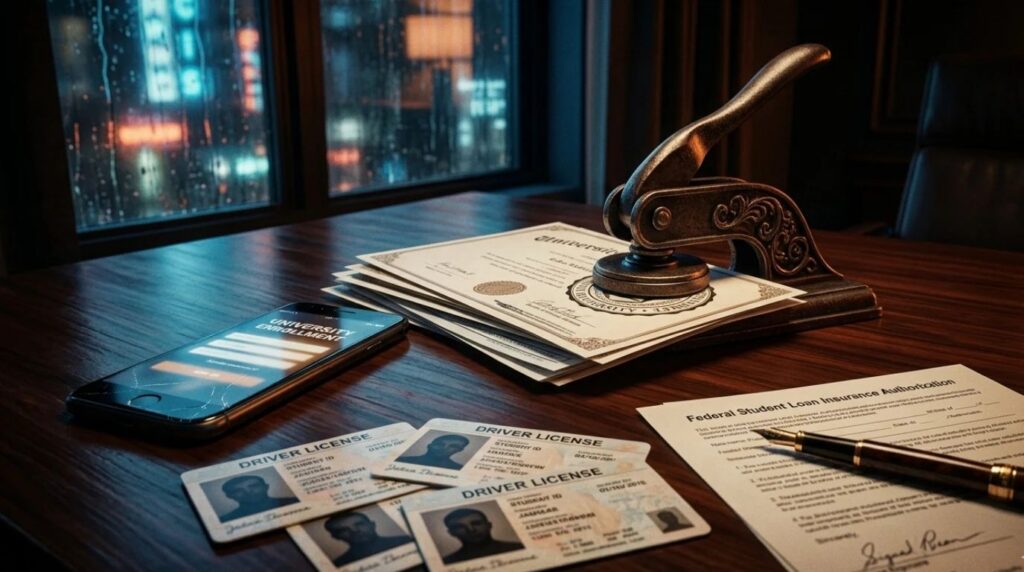
The Winchester University Scam: Inside a $5M Fake Student Loan Insurance Fraud
The Ghost University That Never Existed
In New York, where higher education is often viewed as the gateway to wealth and stability, “Winchester University” appeared to promise opportunity, career growth, and financial aid access for struggling students.
But behind the polished digital website and professional enrollment system, investigators later discovered there were no classrooms, no professors, and almost no legitimate students.
According to investigators, the institution functioned as a sophisticated digital front designed to steal millions from federally insured student loan programs through fake enrollments, stolen identities, and fraudulent loan forgiveness claims.
Authorities estimated that the operation generated nearly $5 million in fraudulent educational funding while exposing major weaknesses inside America’s federal student loan insurance infrastructure.
The case became one of the clearest examples of how organized fraud networks can weaponize technology, digital education systems, and identity manipulation to exploit government-backed financial programs.
Dissecting the Winchester Ghost Campus
How Did the Scam Work?
From a risk-analysis and insurance perspective, experts believe the fraud network exploited weaknesses in two-factor verification systems and identity authentication procedures connected to federal student aid programs.
- Creating the Institution: Investigators say the organization established “Winchester University” as a technically registered educational entity, taking advantage of weaknesses in online institutional registration systems.
- Creating “Ghost Students”: The operation allegedly used stolen identities and fabricated personal records to create fake student profiles capable of qualifying for insured educational loans and federal aid programs.
- Automatic Loan Disbursement: Once applications were approved, student aid funds were reportedly transferred directly to accounts controlled by the fake institution.
- Fraudulent Loan Forgiveness Claims: Investigators later discovered suspicious patterns involving claims of permanent disability and student deaths used to trigger federal loan discharge protections, shifting financial losses onto government-backed insurance systems.
How Investigators Uncovered the Scheme
Unlike traditional fraud investigations, authorities reportedly did not uncover the Winchester scheme through physical inspections or whistleblowers alone. Instead, advanced anomaly-detection systems played a central role.
- Abnormal Disability and Death Claims: Insurance analysts noticed that “Winchester University” generated disability discharge and death-related loan forgiveness requests at rates dramatically higher than national averages.
- Repeated Medical Signatures: Investigators allegedly found that large numbers of disability certifications and medical documents were signed by the same physician connected to a small out-of-state clinic.
- Financial Link Analysis: Banking investigations later traced funds from multiple student identities into centralized shell-company accounts reportedly controlled by the organizers behind the fraud network.
- Digital Identity Patterns: Federal investigators identified repeated login behaviors, overlapping IP addresses, and coordinated enrollment activity inconsistent with legitimate student populations.
The Insurance and Financial Fallout
The Winchester University case exposed how federal student loan insurance protections can become vulnerable when digital verification systems fail to evolve alongside organized financial crime.
Insurance experts note that government-backed educational funding systems are particularly attractive targets because approved institutions often receive rapid financial disbursements before extensive long-term behavioral verification occurs.
Large-scale student aid fraud also increases financial pressure across the broader education system by contributing to stricter verification rules, slower loan approvals, and higher administrative costs for legitimate borrowers.
Major student loan fraud operations have repeatedly exposed structural weaknesses in federally supported educational finance programs. Similar concerns appeared in the
Student Loan Fraud Scheme in Missouri
,
where investigators uncovered another network using fake enrollments and identity manipulation to exploit insured student loan systems.
The financial risks surrounding higher education can also extend beyond fraud itself. Tuition protection disputes and emergency withdrawal cases have highlighted how vulnerable students and families can become when unexpected crises interrupt academic plans, as explored in
A Student, a Sudden Illness, and the Hidden Lesson Behind Tuition Insurance
.
Psychological and Academic Insights
Researchers studying organized financial crime often explain schemes like the Winchester University fraud through the framework of “The Fraud Triangle,” which focuses on opportunity, pressure, and rationalization.
- Criminal Rationalization: Offenders involved in government fraud frequently justify their actions by viewing federal programs as impersonal systems rather than sources of public financial support.
- Digital Manipulation Culture: Studies examining cyber-enabled fraud show that online systems with weak identity verification become especially vulnerable to coordinated criminal operations.
- Normalization of Fraud: When fraudulent applications repeatedly succeed without immediate consequences, participants often begin treating illegal activity as a sustainable business model.
- Institutional Blind Spots: Academic researchers have repeatedly warned that rapidly expanding online education systems can create verification gaps large enough for organized fraud networks to exploit at scale.
Re-Engineering the Verification System
The Winchester case became part of a broader push to strengthen fraud prevention systems across federal educational finance programs.
- Enhanced Identity Verification: Educational institutions and loan providers increasingly rely on multi-factor authentication, biometric verification, and behavioral analytics to validate applicants.
- Direct Federal Database Matching: Authorities now perform stricter cross-checking with Social Security Administration records, criminal databases, and death registries before approving loan discharge requests.
- AI-Based Fraud Monitoring: Government agencies and insurers increasingly use machine-learning systems to detect abnormal enrollment behavior and coordinated financial activity.
- Federal Criminal Exposure: Individuals involved in student loan fraud schemes commonly face charges including wire fraud, identity theft, money laundering, and conspiracy offenses carrying lengthy federal prison sentences.
FAQ
Q: How can legitimate students protect themselves from fake student loans?
A: Financial experts recommend monitoring credit reports regularly and considering a credit freeze if no new loans or accounts are needed.
Q: Do student loan fraud schemes affect legitimate borrowers?
A: Yes. Large-scale fraud often leads to stricter approval systems, additional verification requirements, and higher administrative costs across student lending programs.
Q: Why are online educational systems vulnerable to fraud?
A: Weak digital identity verification systems, automated approvals, and rapid online enrollment structures can create opportunities for organized fraud networks.
Q: What agencies investigate student loan fraud?
A: Investigations are typically handled by the FBI, the U.S. Department of Justice, and the Department of Education Office of Inspector General (OIG).
Conclusion
The Winchester University case demonstrated how technology can become both an educational tool and a weapon for organized financial crime.
The broader lesson is clear: multi-factor verification systems are no longer optional safeguards — they are essential defenses protecting the integrity of modern educational finance systems.
As fraud networks become increasingly sophisticated, insurers, financial institutions, and government agencies face mounting pressure to modernize oversight systems before digital manipulation evolves into even larger financial disasters.
For the insurance industry, the case remains a powerful reminder that prevention, behavioral analysis, and early anomaly detection are often more valuable than recovering stolen funds after the damage is already done.
Sources
-
FBI Press Release:
Investigation into Fake University Student Loan Fraud Scheme
-
U.S. Department of Justice:
Sentencing of the Mastermind Behind the Fraudulent Insurance Network
-
National Association of Insurance Commissioners (NAIC):
Trends in Student Loan Insurance Fraud Prevention