
Fine Art Insurance: How Environmental Data Loggers Verify Luxury Property Claims
Evaluating high-value property claims involving classic artwork and museum collectibles requires a thorough review of gallery microclimate records and physical material forensics. When a gallery owner reports the total loss of a valuable painting due to an alleged sudden building maintenance failure, insurance adjusters must audit the property’s environmental history. Processing a fine art insurance claim for damaged luxury assets has become highly scientific today, as independent environmental data loggers and smart climate monitoring systems provide an unalterable record of the exact humidity and temperature levels surrounding the property.
Reported Water Damage to a Classic Oil Painting
A private art dealer in New York was facing severe financial deficits due to falling gallery attendance and high quarterly building lease renewals. To secure immediate liquidity, the owner decided to simulate an accidental property loss involving a 19th-century oil painting valued at $130,000, which was fully covered under his specialized luxury property schedule.
The dealer hired a local artist to create a surface-level replica of the insured painting using modern, low-cost materials. He then moved the authentic original artwork to a secure, climate-controlled off-site storage unit registered under a corporate pseudonym. Over a weekend, the owner hung the duplicate painting in the gallery’s main exhibition room, intentionally splashed water across its surface to dissolve the water-soluble pigments, and spilled water near a bathroom pipe to create the appearance of a major plumbing leak. On Monday morning, he filed an official property loss claim, stating that a pipe failure destroyed the high-value asset over the weekend.
Auditing Gallery Climate Logs
Why Was the Fine Art Claim Audited?
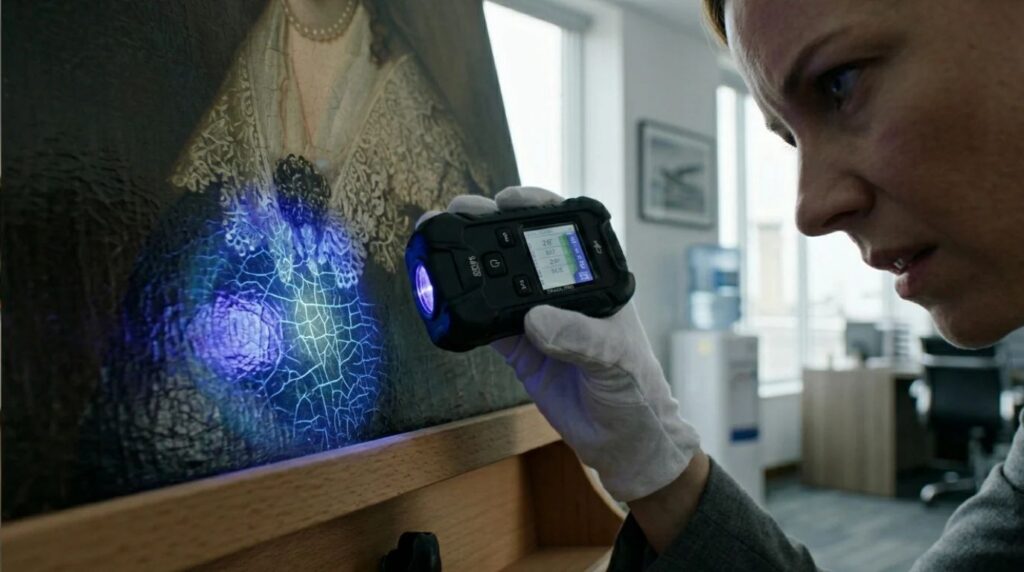
The specialized fine art surveyor noted immediate physical discrepancies during the laboratory assessment of the damaged canvas. The warp of the linen and the cracking patterns of the paint did not match the typical degradation behavior of an authentic century-old oil painting exposed to moisture. Furthermore, the local plumbing repair invoice provided by the owner showed no records of actual pressure loss or pipe repairs within the building’s main water system.
The gallery owner assumed that because the visible paint on the canvas was visibly running and damaged by liquid, the insurance provider would simply declare the item a total loss and approve the payout without verifying the building’s internal climate history.
How Was the Fraud Discovered?
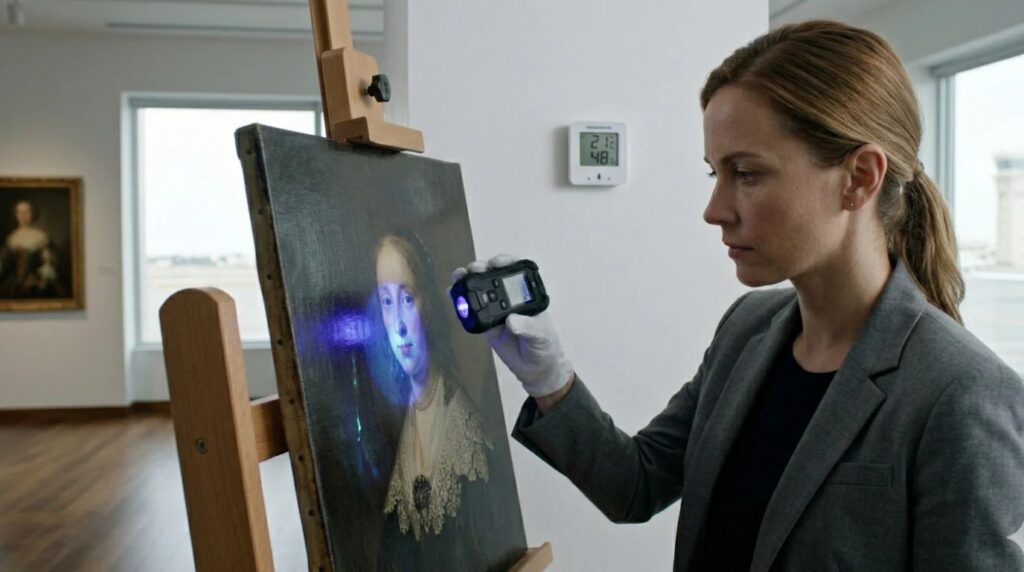
The insurance company’s fine art investigation unit downloaded the encrypted files from the gallery’s wall-mounted **Environmental Data Logger**. High-end galleries are contractually required to maintain these independent devices to ensure that temperature and relative humidity remain within strict parameters to preserve delicate canvas fibers.
The extracted data report provided definitive proof that exposed the setup. The data logger logs showed that the relative humidity in the exhibition room remained perfectly stable at 50% throughout the entire weekend, with zero spikes that would indicate open water or a pipe leak in the room. This mechanical checking of internal sensor metrics is standard procedure across premium lines; just as aviation adjusters examine cloud flight records during an aviation property insurance claim investigation involving drone telematics, fine art adjusters utilize environmental logs to verify luxury property conditions.
Fine Art Forensic Underwriter Insight: “Paintings react instantly to surrounding moisture, and so do digital data loggers. When the room’s climate file proves there was no humidity increase during the weekend, it means water was applied directly to that specific canvas by hand, invalidating the accidental leak claim.”
Microclimate Data and Material Authenticity
Analyzing luxury property losses requires an understanding of conservation metrology and behavioral risks in high-end commerce:
- The Security of Environmental Metrology: Research published in the International Journal of Art Conservation and Forensic Science confirms that continuous climate data loggers utilize tamper-proof internal storage, making their timestamped readings highly reliable legal evidence in asset disputes.
- Moral Hazard in Illiquid Luxury Assets: A financial study from the Journal of Cultural Economics indicates that fine art fraud correlates closely with broader economic contractions, as dealers attempt to liquidate illiquid physical assets through insurance contracts when private gallery sales slow down.
Fine Art Exclusions and Criminal Referrals
How Does the Policy Apply?
Fine art and collectible policies are governed by strict structural requirements regarding asset preservation and honest reporting. Under the standard **Concealment, Misrepresentation, or Fraud Clause**, any deliberate attempt to swap an insured asset or falsify environmental damage completely voids the policy. The insurance carrier is legally released from paying the loss and can cancel all connected commercial lines held by the dealer.
The art dealer’s claim was formally denied, his fine art policy was canceled, and the original painting was recovered during a law enforcement search of the off-site storage unit. The dealer was arrested and charged with grand larceny, insurance fraud, and criminal simulation. This strict legal outcome is consistent across all specialized sectors when dishonesty is proven. Whether an individual is faking drone flights or hiding high-value artwork while fabricating a property loss during a marine cargo insurance investigation involving transit temperature data, the legal consequence remains absolute: total claim rejection, asset recovery, and criminal prosecution.
Key Terms to Know in Collectibles Insurance:
- Scheduled Personal Property Endorsement: A specialized policy addition that covers specific high-value items based on a certified professional appraisal, requiring separate verification during a loss.
- The Environmental Maintenance Warranty: A strict contractual rule stating that the policyholder must maintain certified climate and humidity controls. Failing to keep these systems active can void the policy’s validity.
Questions (FAQs)
1. Does standard homeowners insurance cover expensive fine art and paintings?
No. Standard homeowners policies have low sub-limits for luxury goods, often capping fine art coverage at $1,000 to $2,500 total. Valuable collections must be separately appraised and insured under a dedicated scheduled fine art policy.
2. Can an insurer deny an art claim if the environmental data logger was turned off?
Yes. If your policy includes a warranty requiring continuous climate tracking, turning off or failing to maintain the environmental data logger allows the insurer to deny the claim for a material breach of contract terms.
3. How do forensic experts tell the difference between an original painting and a copy?
Experts use ultraviolet (UV) fluorescence, X-ray radiography, and microscopic pigment analysis. These forensic tests reveal the age of the canvas materials and determine if modern synthetic paints were used to create a duplicate.
Conclusion
Managing an art collection or operating a commercial gallery requires strict adherence to preservation standards and honest cooperation with underwriters. The environmental data logs analyzed in this water damage case show that modern microclimate tracking makes faking a gallery loss highly impractical. Attempting to manage operational business debts by fabricating an asset loss results directly in policy voidance and criminal charges. Maintaining accurate gallery logs and relying on transparent fine art insurance practices is the only effective way to preserve your professional reputation and your freedom.

Pingback: Commercial Property Insurance: Restaurant Food Spoilage Case Study
Pingback: Commercial Property Insurance: Medical Machinery System Logs Case Study