
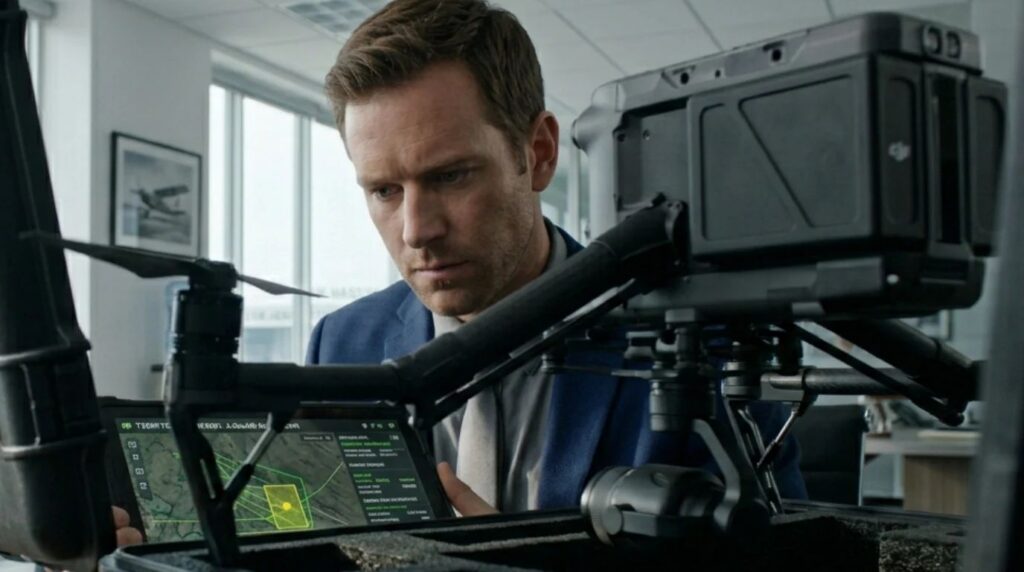
Aviation Property Insurance: How Cloud Telematics Verifies Commercial Drone Claims
Evaluating physical damage claims involving high-end unmanned aerial vehicles (UAVs) requires a comprehensive assessment of flight control telemetry and cloud-synced operational software. When a media production firm reports the complete loss of an expensive cinema-grade drone due to an alleged mid-air system failure over water, insurance adjusters must verify the aircraft’s physical tracking logs. Processing an aviation property insurance claim for specialized commercial equipment has become highly technical, as modern drone operating systems automatically back up live flight telemetry, motor power distribution, and GPS coordinates directly to independent cloud infrastructure.
Reported Equipment Hull Failure Over Water
A boutique digital advertising agency was facing a sudden drop in client contracts, leaving them with high monthly equipment financing obligations for their commercial cinematography gear. To generate immediate revenue, the business owners formulated a plan to simulate a catastrophic hardware loss. Their objective was to collect a $32,000 total-loss payout for their premium heavy-lift cinematic drone, which was fully protected under a specialized commercial aviation property rider.
The owners purchased an identical, non-functional broken drone body from an online salvage forum for a small amount of money. They traveled to a coastal filming location and intentionally threw the broken shell into deep ocean water from a cliff. They then initiated a flight session using their actual, high-value insured drone nearby, but manually switched off the remote control power mid-flight to simulate a sudden loss of signal. The expensive drone safely executed its automated “Return-to-Home” safety protocol and landed behind their vehicle, allowing them to pack it away to sell privately later. The owners filed an official insurance loss claim, stating that the premium aircraft suffered an unrecoverable software error and plummeted directly into the ocean.
Investigative Analysis: Reviewing Cloud Flight Telemetry
Why Was the Drone Claim Audited?
The specialty lines claims adjuster noticed several administrative anomalies during the initial documentation review. The media company claimed the drone was lost at sea and completely unrecoverable, meaning no physical wreckage could be inspected. However, an audit of online equipment marketplaces showed that a matching premium cinema camera kit, carrying the exact serial number registered under the company’s policy, had been listed for sale from a private account just 48 hours after the reported crash.
The business owners assumed that because the physical asset was supposedly at the bottom of the ocean, the insurance company would rely entirely on their verbal statement and the broken connection log displayed on the handheld controller screen to approve the claim payout.
How Was the Fraud Discovered?
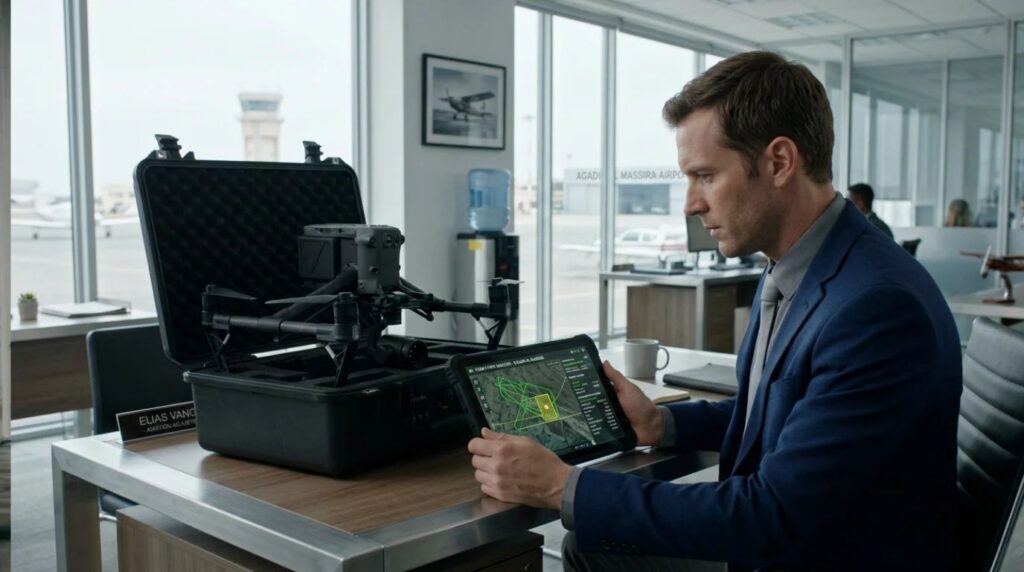
The insurance company’s aviation forensic unit requested the complete, unedited server-side data logs from the drone manufacturer’s cloud network. Modern commercial drone systems require a continuous digital log link via the operator’s smartphone or tablet application, which uploads real-time internal sensor metrics to secure external databases during operations.
The downloaded telemetry report provided clear mechanical evidence that exposed the fraud. The internal sensor data proved that at the exact timestamp the operators claimed the drone suffered a terminal power failure and dropped into the water, the aircraft was actually flying perfectly at a stable altitude. The GPS mapping logs showed the drone executed a controlled, smooth landing on solid ground near the highway coordinates before the system app was manually shut down. This precise checking of asset data is standard protocol; just as cargo adjusters check temperature sensors during a marine cargo insurance investigation involving cold chain logistics data loggers, aviation adjusters use cloud flight records to verify equipment loss locations.
Aviation Forensic Systems Analyst Insight: “Operators can turn off their remote controllers to fake a signal loss, but they cannot delete the independent cloud logs that record the drone’s actual physical flight path. The telemetry proved the aircraft returned to land safely, which completely invalidated the underwater crash story.”
Telemetry Verification in Commercial Drone Operations
Analyzing specialized equipment claims involves understanding drone logistics telemetry and behavioral fraud risks during business downturns:
- The Security of Non-Volatile Flight Records: Research published in the Journal of Unmanned Aerial Vehicle Systems & Security confirms that encrypted cloud-synced telemetry logs are highly reliable legal assets in commercial court cases, as the chronological data blocks cannot be modified by the operator after a flight session.
- Moral Hazard in Commercial Photography Capital: A financial study from the Aviation Insurance Research Review shows that tech-heavy media equipment experiences rapid market depreciation, which correlates with an increase in moral hazard as operators seek to recoup their original purchase price through insurance policies when asset values fall.
Fraud Voidance and Aviation Database Flagging
How Does the Policy Apply?
Commercial aviation and hull property policies require strict compliance with transparent asset tracking and operational reporting. Under the standard **Fraud, Misrepresentation, and Concealment Clause**, providing a false flight timeline or hiding an insured commercial asset immediately voids the entire insurance contract. The underwriting carrier is legally permitted to reject the claim in its entirety and cancel any remaining commercial liability lines associated with the business entity.
The agency’s claim was permanently denied, their commercial property policy was canceled, and the high-value drone was tracked down and confiscated from the private buyer. The case was referred to federal prosecutors due to the illegal sale of insured property and multi-state wire fraud. This strict legal response is applied uniformly across all specialized sectors when misrepresentation is discovered. Whether an individual is manually breaking a luxury car bumper to fake a crash during a luxury auto insurance claim investigation involving airbag data logs or faking an aerial vehicle loss, the legal outcome is identical: claim denial, loss of insurance rights, and direct criminal referral.
Key Terms to Know in Commercial Drone Insurance:
- Hull Coverage: A specific insurance term that covers physical damage or total loss of the actual aircraft body and its permanently attached equipment during flight or storage.
- Payload Insurance: A separate policy endorsement that covers high-value cameras, thermal sensors, or cinematic lenses mounted on a drone body, requiring separate equipment logs for verification.
Questions (FAQs)
1. Does standard commercial business insurance cover professional cinematic drones?
No. Standard commercial general liability or standard business property policies usually exclude aviation equipment and unmanned aircraft. Businesses must purchase a dedicated “Commercial Drone Policy” or an aviation hull endorsement.
2. Can an insurance company deny a drone claim if the pilot fails to sync their flight logs?
Yes. If the policy terms state that providing official manufacturer telemetry reports is a requirement for claim evaluation, refusing to provide or sync these logs can lead directly to a claim denial for non-cooperation.
3. What happens if a commercial drone is genuinely lost in deep water?
If a real accident occurs over water, the cloud logs will record normal engine performance and stable flight parameters up to the exact millisecond of the water impact, proving to investigators that the loss was a genuine accident.
Conclusion
Operating a professional media or commercial drone enterprise requires absolute administrative transparency and honest reporting during equipment losses. The cloud-synced flight telemetry analyzed in this cinematic drone case demonstrates that modern aviation electronics make faking an aircraft loss exceptionally difficult to pull off. Attempting to manage corporate equipment debts by fabricating a hardware crash will result in immediate policy cancellation and federal fraud charges. Maintaining verifiable flight records and adhering to honest aviation property insurance verification standards is the only reliable way to protect your commercial operations and your professional livelihood.


Pingback: Fine Art Insurance: Environmental Data Logger Case Study