The Smart Fridge Cyber Ransom: How IoE Vulnerabilities Extort Modern Homeowners
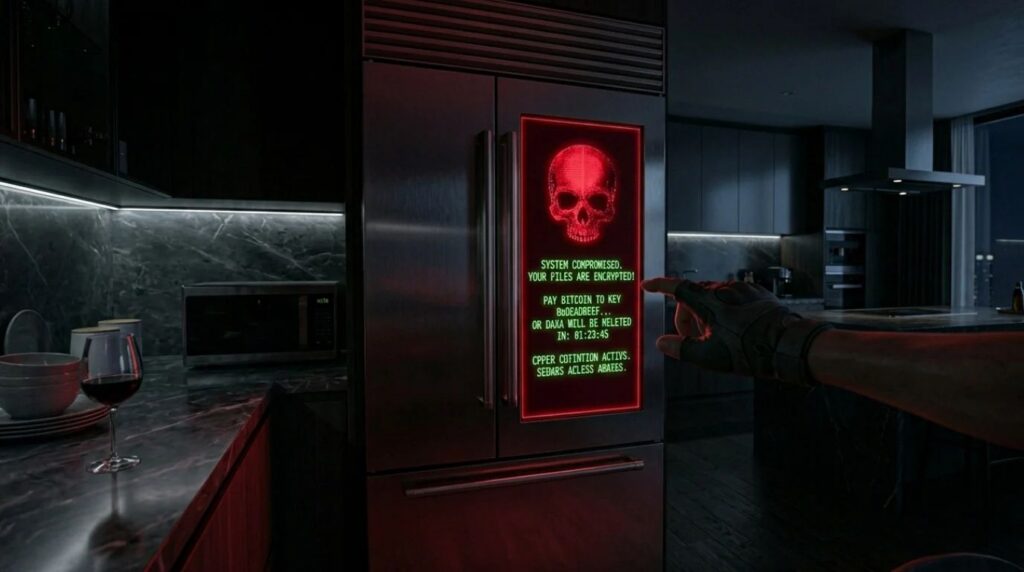
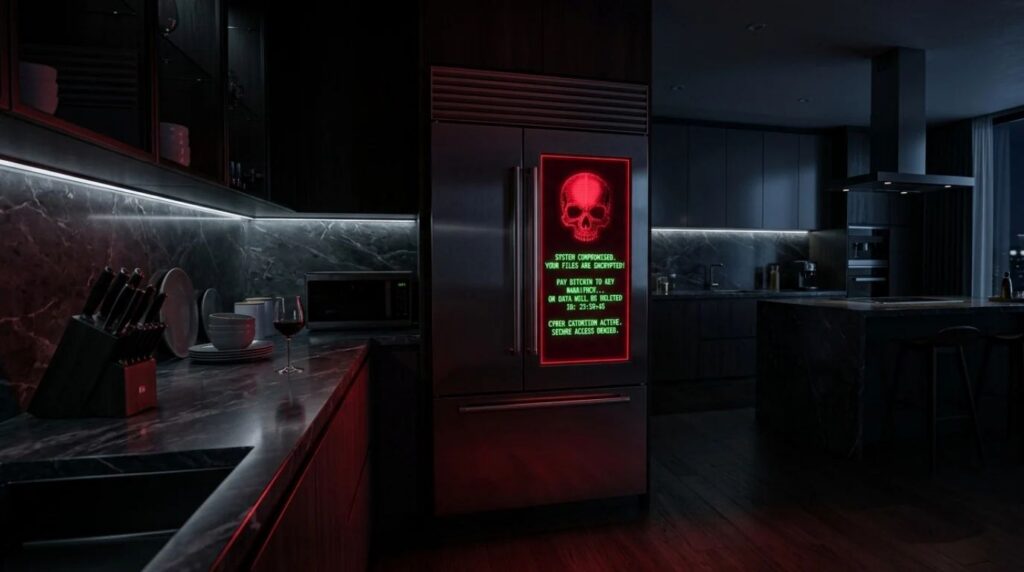
Personal cyber insurance for homeowners is no longer a luxury; it has become a critical shield as cybercriminals migrate from corporate networks straight into American kitchens. Imagine walking into your kitchen on a quiet Tuesday evening, only to find your $4,000 smart refrigerator flashing a crimson skull with a demand for $30,000 in Bitcoin. For the Miller family in Austin, Texas, this futuristic nightmare became a harsh reality when their entire home network was encrypted through their Wi-Fi-enabled appliance. This wasn’t just a digital glitch; it was a calculated, high-stakes home extortion scheme that exposed the dangerous gap between physical security and digital vulnerability.
The Anatomy of an Internet-of-Everything (IoE) Breach
Why Did the Cyber-Attack Happen?
The attack targeted a critical behavioral habit among modern consumers: convenience over security. When Bob Miller purchased a cheap, unbranded Wi-Fi backup camera for his yard, he left its default factory password unchanged.
Cybercriminals utilize automated scanning bots that constantly scour the internet for open IP addresses with factory-set credentials (like “admin” or “1234”). Once the hackers compromised the weak security protocols of the outdoor camera, they breached the home’s central router. From there, they lateralized through the network to the smart fridge, which served as the ultimate Trojan Horse because it was synced directly to Bob’s personal smartphone, bank applications, and work laptop.
How Was the Exploit Investigated and Evaluated?
When specialized cyber forensic adjusters investigated the breach, they utilized network traffic analysis and log audits to trace the digital footprints of the hackers. Insurance forensic experts discovered that the hackers deployed a variant of ransomware that targeted smart home operating systems. The cybercriminals didn’t just lock the data; they actively manipulated the physical environment—cranking the smart thermostat to 90°F (32°C) and locking the smart doors—to induce psychological panic, ensuring the family felt physically unsafe until the ransom was negotiated.
Insurance Expert Insight: “Traditional criminals need a crowbar to enter your home. Modern cybercriminals only need an unpatched firmware update on a kitchen appliance. If it connects to the internet, it is an entry point.”
The “Smart Home” Security Paradox
To truly comprehend how these vulnerabilities occur, we must look at the psychological and technical frameworks governing consumer behavior:
- The Security Fatigue Phenomenon: According to research from the National Institute of Standards and Technology (NIST), modern consumers suffer from “security fatigue,” leading them to neglect critical updates and password management on secondary household devices (like fridges or bulbs) compared to their primary laptops or phones.
- The Internet of Things (IoT) Architectural Flaw: A landmark paper published in the IEEE Internet of Things Journal highlights that consumer IoT devices are systematically manufactured without robust built-in cryptographic defenses due to cost-cutting measures, shifting the massive burden of security entirely onto the untrained homeowner.
The Static Definition of “Physical Peril”
How Does the System Work?
When the Millers filed a claim under their standard homeowners insurance policy (HO-3), they faced an immediate denial. Why? Because traditional property insurance is legally anchored to the concept of Direct Physical Loss.
Under standard insurance law, for a claim to be paid, there must be a tangible alteration to physical property. For instance, classic investigations regarding physical property often revolve around intentional destruction, such as a home insurance arson fraud investigation case, where physical evidence of fire is clear. However, in the eyes of the law, encrypted data, altered software code, and a locked digital interface do not constitute physical damage.
The Legal Distinction:
- Standard Home Insurance: Covers tangible property against physical perils (Fire, Lightning, Theft).
- Personal Cyber Endorsement (Rider): Specifically bridges the gap by explicitly defining “Data Loss,” “Cyber Extortion,” and “Digital Restoration” as covered perils, independent of physical destruction.
Because Bob had proactively attached a $5/month Personal Cyber Insurance Rider to his secondary insurance policy, the carrier stepped in to cover data restoration costs, legal defense liabilities, and the fees for specialized ransomware negotiators.
FAQ
1. Does my standard home insurance cover ransomware attacks at home?
No. Standard homeowners policies explicitly exclude losses related to cyber extortion, data corruption, and digital identity theft unless there is accompanying physical damage to the hardware.
2. What is a Personal Cyber Insurance Rider?
It is an optional, low-cost coverage add-on that you can attach to an insurance policy to cover financial losses, legal fees, network restoration, and ransom demands resulting from smart home cyberattacks.
3. How can I stop hackers from accessing my smart appliances?
Always change the default factory passwords on every connected device, set up a separate guest Wi-Fi network exclusively for your smart appliances, and keep your router’s firmware fully updated.
Conclusion
The digitization of our living spaces offers immense comfort, but it concurrently expands our digital risk profile. The lesson of the locked smart fridge is clear: true home security is no longer just about locking your front door; it is about securing your network traffic. Relying on outdated insurance frameworks to protect a modern, interconnected home is a dangerous financial gamble. To safeguard your digital assets and identity, ensuring you possess a dedicated personal cyber insurance for homeowners policy is the ultimate defense in an increasingly connected world.