Marine Cargo Insurance: How Temperature Data Loggers Verify Cold Chain Loss Claims
Evaluating commercial cargo claims involving temperature-sensitive goods requires a strict verification of refrigeration logs and transit telemetry. When an import company reports the total loss of a pharmaceutical or food shipment due to a cooling failure at sea, insurance adjusters must investigate the physical and digital tracking records of the voyage. Processing a marine cargo insurance claim for spoiled goods has become highly data-driven today, as independent cold-chain monitoring devices and container telemetry provide objective data regarding the exact internal climate of cargo throughout the transit process.
Reported Refrigeration Failure during Maritime Transit
A mid-sized pharmaceutical distribution firm was experiencing financial difficulties due to a sudden shift in domestic drug import regulations, leaving them with an overstock of specialized antibiotics close to their expiration dates. To recover their capital investment, the company management planned to simulate a refrigeration failure during shipping to collect a $110,000 insurance payout under their ocean cargo policy.
The company scheduled a marine transport container to move the medicine from a coastal port to an international destination. Instead of utilizing a continuously powered refrigerated container (reefer) during the pre-shipping storage phase, they kept the pallets inside an uncooled, standard dry warehouse for four days during a summer week to minimize local utility costs. Knowing this heat exposure would spoil the molecular integrity of the medication, they then loaded the goods into the marine reefer container and manually set the temperature logs to indicate an abrupt system failure mid-way through the sea route. Upon arrival at the destination port, they filed a formal cargo loss claim, citing an unrepairable cooling malfunction during transit.
Reviewing Independent Cold Chain Sensors
Why Was the Cargo Claim Audited?
The marine surveyor appointed by the insurance carrier noticed a major inconsistency when examining the ship’s main machinery records. The container ship’s central engineering log showed that the specific refrigerated container maintained a constant, uninterrupted supply of electrical power and displayed normal interior temperature readouts during the entire sea voyage. This flatly contradicted the importer’s claim of a sudden mechanical cooling blackout at sea.
The policyholder assumed that the insurance company would only look at the final condition of the spoiled medicine upon arrival and accept the internal container system dashboard report without verifying independent environmental sensors hidden inside the actual cargo cargo pallets.
How Was the Fraud Discovered?
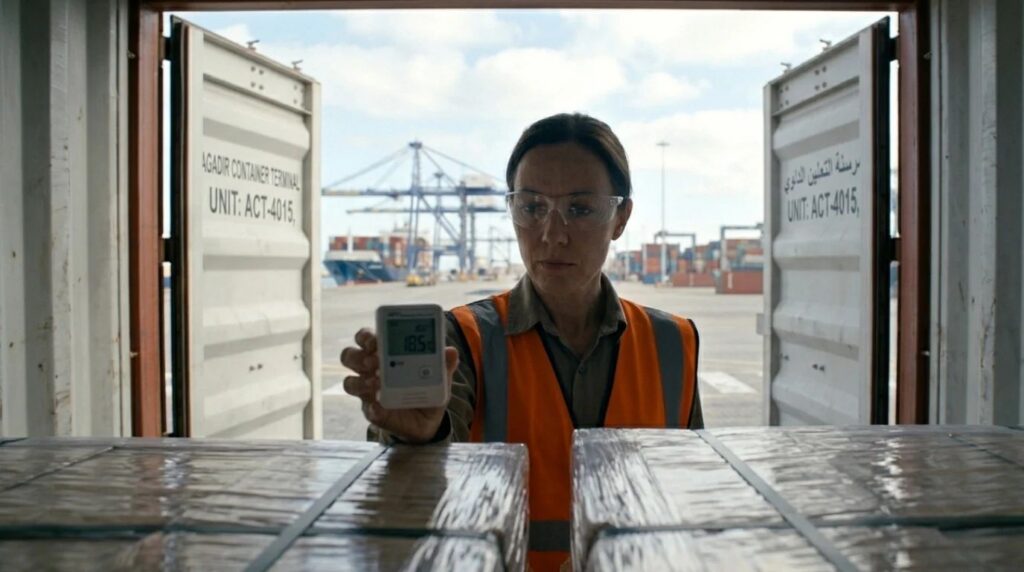
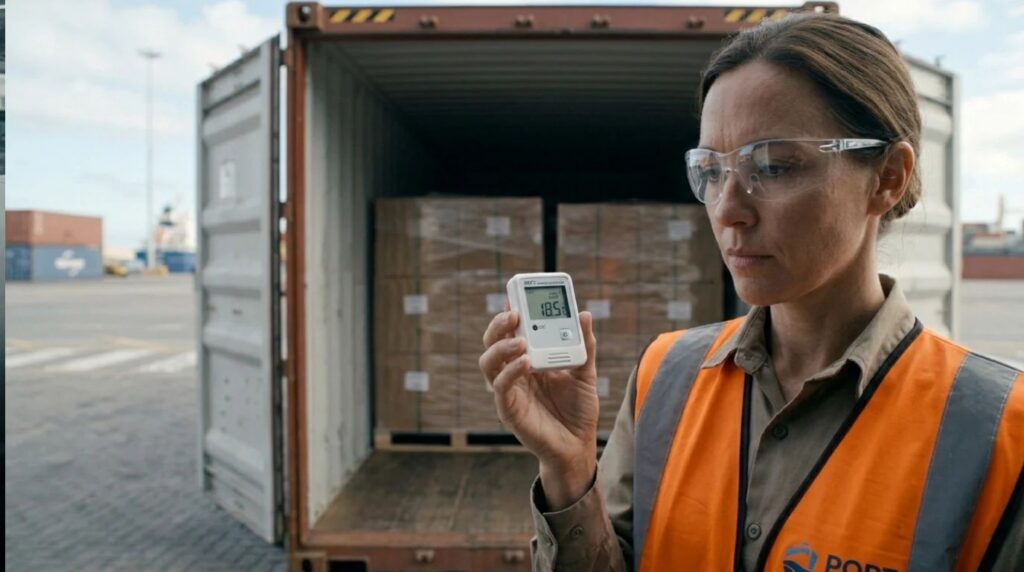
The cargo insurance special investigation unit retrieved the independent **USB Temperature Data Loggers** placed inside the medicine boxes. These small, automated sensors are legally required by health authorities to monitor the cold chain independently of the shipping line’s equipment.
When forensic analysts extracted the data from the internal sensor chips, the temperature timeline revealed that the thermal damage occurred days *before* the container was loaded onto the ship. The data logs proved the medicine reached 95 degrees Fahrenheit while stationary on land, matching the weather logs of the local dry warehouse. This precise method of verifying property history is standard procedure across the underwriting industry; just as auto adjusters download electronic crash files during a luxury auto insurance claim investigation involving airbag control modules, marine adjusters use environmental telemetry data to confirm cold chain logistics.
Marine Cargo Forensic Surveyor Insight: “Container machinery logs can be misread or misreported, but independent data loggers embedded inside the cargo boxes record the absolute reality. When the data shows the thermal damage occurred while the shipment was still sitting on a local loading dock, the transit claim is legally invalidated.”
Cold Chain Veracity and Maritime Risk
Analyzing global logistics losses requires an understanding of supply chain technology and behavioral economics in commercial shipping:
- The Reliability of Independent Telemetry in Logistics: Research published in the International Journal of Refrigeration and Supply Chain Management confirms that decentralized data loggers provide legally binding baselines in maritime disputes, as their internal clocks and sensors cannot be altered retroactively without breaking digital cryptographic seals.
- Moral Hazard in Perishable Asset Management: A study from the Institute of Maritime Economics shows that commercial cargo fraud involving perishable or pharmaceutical items increases significantly as products approach the final 10% of their shelf-life, as liquidation via insurance payouts presents a higher return than distressed market sales.
Cargo Forfeiture and International Trade Impacts
How Does the Policy Apply?
Commercial maritime transit policies are strictly enforced under international cargo rules and contain a **Fraudulent Claims and Concealment Provision**. Under these terms, any deliberate attempt to misrepresent the timing or cause of a cargo loss invalidates the entire insurance certificate. The carrier is legally permitted to reject the loss completely and terminate all active transit coverage for that specific corporation.
The pharmaceutical company’s claim was formally denied, their marine coverage was revoked, and the corporation was blacklisted from major underwriting networks. The insurer forwarded the sensor data to federal trade authorities, resulting in criminal indictments for international wire fraud and violations of public health transportation laws. This structured legal outcome is consistent across all specialized sectors when misrepresentation is documented. Whether an individual is fabricating electrical system logs during a homeowners property insurance claim investigation involving a smart thermostat or staging an international cargo loss, the systemic result is identical: claim denial, loss of active policy rights, and criminal referral.
Key Terms to Know in Ocean Marine Insurance:
- Refrigerated Container (Reefer) Clause: A specific contractual section that defines the underwriter’s liability regarding mechanical breakdown of cooling units, requiring proof that the failure occurred during the active coverage period.
- The Cold Chain Warranty: A strict legal requirement stating that the insured party must take all reasonable steps to maintain continuous, certified temperature controls from the point of origin to the final destination.
Questions (FAQs)
1. Does standard marine cargo insurance cover losses due to regular shipping delays?
No. Standard transit insurance policies exclude losses caused by market delays or natural product deterioration over time. To cover temperature spoilage, a business must purchase a specific “Refrigeration Machinery Breakdown Endorsement.”
2. Can an insurer deny a cargo claim if the independent data loggers are missing?
Yes. If the policy text mandates the use of independent cold-chain tracking sensors for high-value pharmaceuticals, failing to provide these data logs during an investigation constitutes a breach of warranty, which can lead to an immediate claim denial.
3. How do forensic investigators check if a temperature sensor was tampered with?
Investigators check the digital metadata and cryptographic signatures embedded within the sensor’s software. If the device was opened, disconnected, or had its internal clock adjusted manually, the system generates a permanent tamper flag in the report.
Conclusion
Managing an international commercial import operation requires absolute compliance with transport regulations and total transparency with your insurance providers. The independent sensor telemetry analyzed in this pharmaceutical cold chain case shows that modern tracking technology makes faking a maritime transit loss extremely difficult to execute. Attempting to balance corporate inventory debts by fabricating an equipment failure results in immediate policy cancellation and international legal prosecution. Maintaining verifiable transport records and adhering to honest marine cargo insurance verification standards is the only reliable way to safeguard your shipping operations and commercial legacy.