
Homeowners Property Insurance: How Smart Home Data Verifies Electrical Damage Claims
Evaluating property damage claims involving modern residential electrical systems requires a careful analysis of grid utility records and internal appliance logs. When a homeowner reports a major power surge that causes extensive damage to heating, ventilation, and air conditioning (HVAC) units, insurance adjusters look at both regional weather patterns and property access data. Processing a homeowners property insurance claim for appliance failure has become more precise today, as internet-of-things (IoT) devices and smart utility meters provide independent digital data regarding the exact timing and nature of household electrical events.
Reported Power Surge Damage to Residential HVAC Systems
A homeowner in Illinois was facing significant financial obligations due to outstanding credit debts and property tax increases. Looking to secure funds to upgrade his aging climate control systems, the owner decided to file a fraudulent property loss claim. He intended to collect a $35,000 payout by simulating an accidental external power surge that supposedly destroyed his high-end HVAC systems and kitchen appliances.
The owner spent several days research online how to induce an electrical short circuit. On a Friday afternoon, before leaving for a weekend trip, he manually set his smart thermostat to its maximum cooling capacity while simultaneously blocking the external ventilation airflow. He then repeatedly toggled the main circuit breakers inside the garage to create a sudden, localized voltage overload. After ensuring the appliances were unresponsive, he left the property. On Monday morning, he contacted his insurance representative to report that a power surge occurred during a summer storm over the weekend, requesting a full equipment replacement under his property coverage.
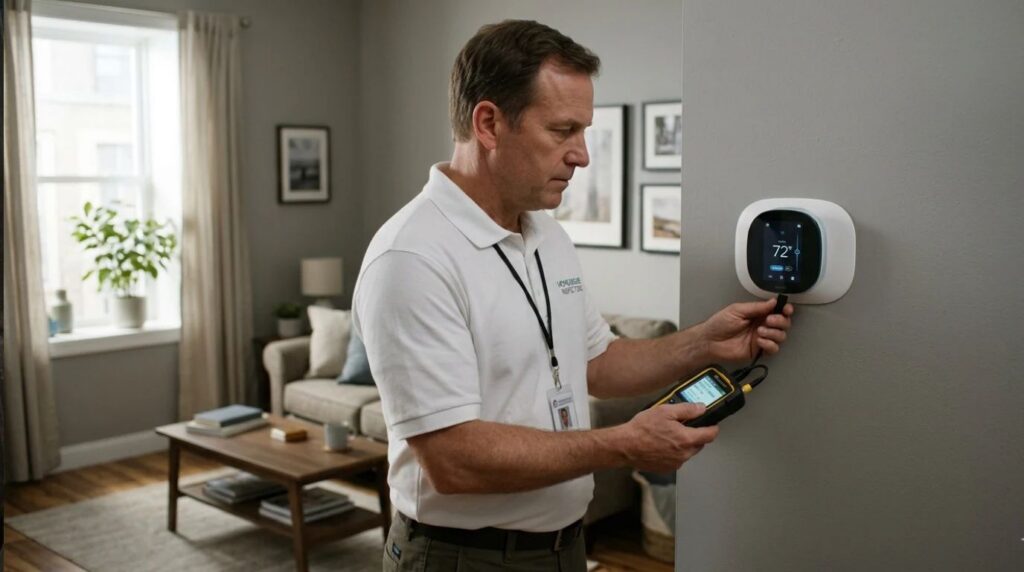
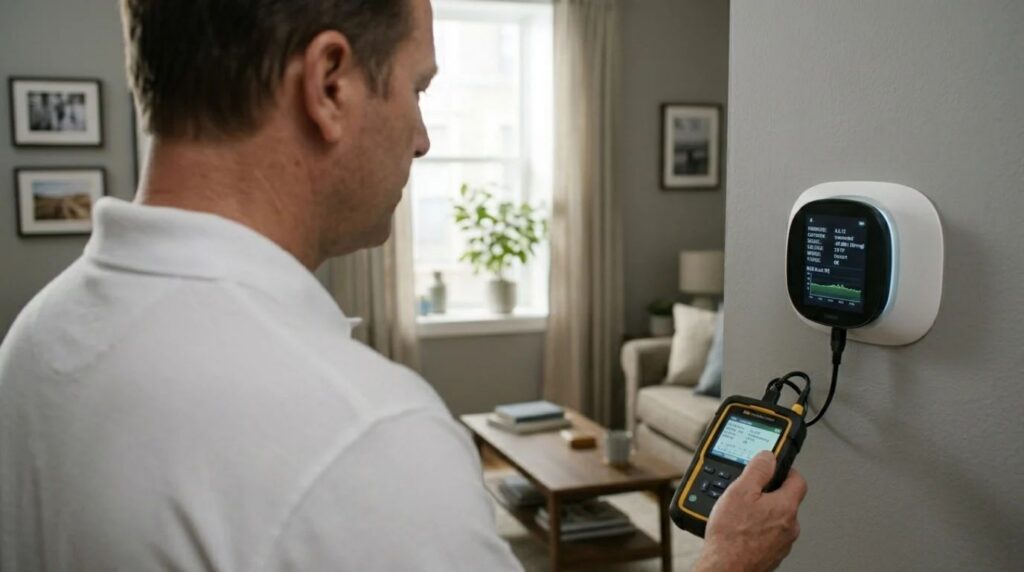
Reviewing Smart Thermostat and Meter Logs
Why Was the Surge Claim Audited?
The claims adjuster initiated a detailed review after checking with the local electrical utility company, which confirmed that no grid disturbances, transformer failures, or lightning strikes were recorded in that specific neighborhood over the weekend. Furthermore, a physical inspection of the damaged appliances revealed internal heat patterns consistent with continuous mechanical strain rather than an instantaneous external high-voltage strike from the grid.
The homeowner believed that because the electrical components were physically broken, the insurer would simply attribute the failure to regular weather hazards and approve the claim without looking into the history of the smart home network logs.
How Was the Fraud Discovered?
The insurance company’s digital forensics team requested the historical operation files from the manufacturer of the home’s connected smart thermostat. Modern internet-enabled thermostats continuously sync operational logs, input commands, and interior temperature levels to secure cloud servers.
The cloud data report revealed a clear timeline that contradicted the owner’s statement. The logs proved that a manual override command was entered directly via the physical touch screen of the thermostat on Friday afternoon, setting the system to an unrealistic temperature target. Minutes later, data from the external smart electric meter showed that the entire house experienced a complete, abrupt power loss caused by a manual breaker shutoff, rather than a gradual surge from the outside lines. This methodical verification of property usage data is a standard practice across the insurance field; just as liability adjusters use GPS telematics during a commercial liability insurance claim investigation involving stolen heavy machinery, property adjusters use connected appliance data to confirm electrical losses.
Property Forensic Engineering Insight: “Connected home systems record human interactions with absolute accuracy. When cloud logs show physical commands being entered at the thermostat immediately before a manual breaker disconnection, it provides an objective record that refutes the story of an accidental weather event.”
IoT Integration in Property Risk Management
Analyzing modern residential property claims involves understanding smart grid reliability and behavioral risks in consumer insurance:
- The Reliability of Smart Grid Metrology: Research from the IEEE Transactions on Smart Grid indicates that modern digital utility meters capture voltage anomalies down to the millisecond, allowing investigators to differentiate between an external grid spike and internal system tampering.
- Moral Hazard in Appliance Depreciation: Studies published in the Journal of Consumer Affairs indicate that property owners are statistically more likely to attempt intentional system overloading when high-capacity household appliances approach the end of their factory warranty period.
Contract Voidance and Claims Forfeiture
How Does the Policy Apply?
Standard residential property contracts operate under the legal principle of utmost good faith and contain an explicit **Concealment or Fraud Exclusion**. If an investigation proves that a policyholder intentionally caused damage to covered property or provided false statements regarding the cause of a loss, the entire policy is voided. The insurance carrier is legally released from any current liability and can decline future renewals.
The homeowner’s claim was formally denied, his policy was canceled, and the insurer referred the data files to the state insurance department. The owner was subsequently prosecuted for insurance fraud and arson-related property endangerment. This legal response is consistent across all specialized underwriting lines when material misrepresentation is discovered. For instance, whether an individual is fabricating electrical system failures or staging an asset loss during a commercial property insurance fraud case involving smart lock data analytics, the structural consequence remains unyielding: total claim rejection, loss of active coverage, and legal liability.
Key Terms to Know in Residential Coverage:
- Equipment Breakdown Endorsement: An optional policy addition that covers mechanical or electrical failure of home systems, provided the damage is completely accidental and not caused by intentional misuse.
- Protective Safeguards Warranty: A contractual agreement requiring the property owner to maintain functioning safety devices and utilities in proper working order to ensure coverage validity.
Questions (FAQs)
1. Does standard homeowners insurance cover appliance damage from regular power surges?
Yes. Most standard policies cover damage caused by sudden and accidental power surges originating from lightning strikes or utility company grid failures, but they do not cover failure due to wear, tear, or intentional overloading.
2. Can an insurer deny an electrical claim based solely on smart meter data?
Yes. If the smart meter logs from the utility company prove that no voltage spikes entered your home from the external grid during the reported time, the insurer has objective evidence to question or deny the surge claim.
3. What happens if smart home devices are damaged during a real power surge?
If a real, accidental surge occurs, the event is fully covered. Forensic investigators will see identical voltage spikes across the utility grid and all connected devices, confirming that the damage was a genuine accident.
Conclusion
Maintaining a modern residential property requires clear operational transparency and accurate communication with your insurance providers. The electronic logs analyzed in this HVAC failure case show that connected home technology makes faking an electrical power surge exceedingly difficult. Attempting to update household machinery through fabricated property claims leads directly to policy voidance and potential legal prosecution. Using certified surge protectors and maintaining transparent homeowners property insurance habits is the only effective way to protect your residence and your financial stability.


Pingback: Luxury Auto Insurance: Airbag Control Module Case Study
Pingback: Luxury Auto Insurance: Airbag Control Module Case Study