The $15,000 Ointment
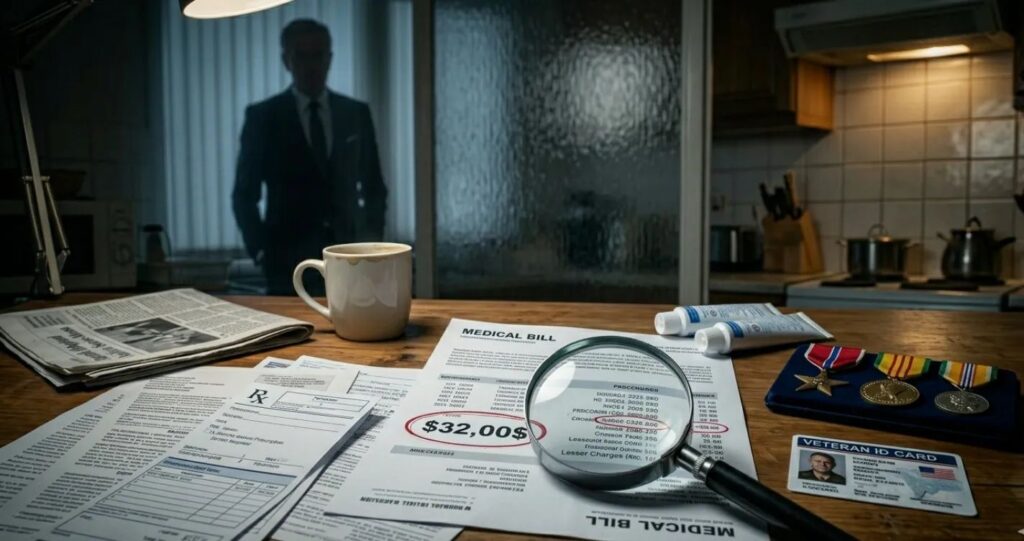
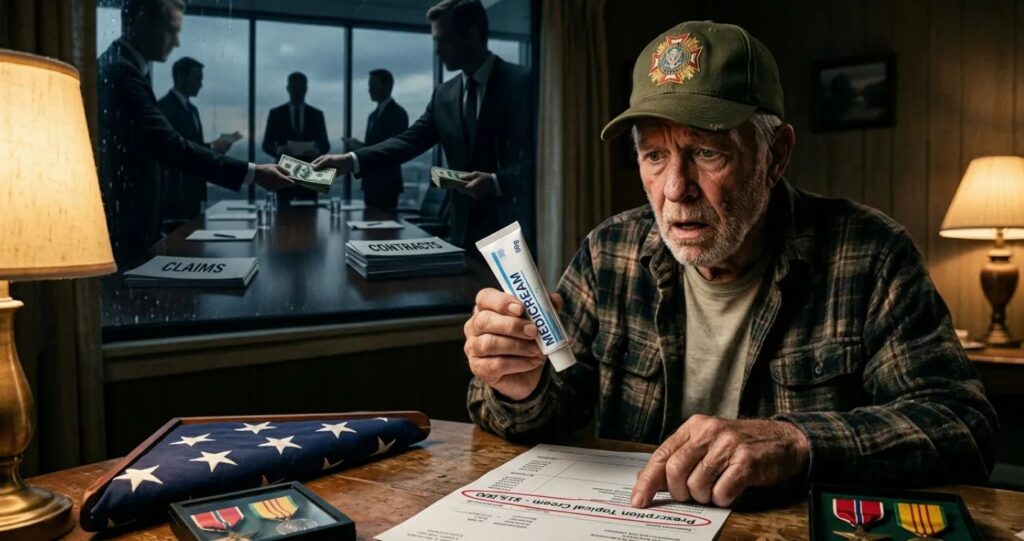
“Staff Sergeant Miller, a retired Marine living in rural Mississippi, didn’t think much of the phone call from the ‘Veterans Health Advocate.’ They promised a ‘new, specialized pain relief’ that would help with his service-connected back injury—at no cost to him. A week later, a small box arrived on his porch containing two tubes of topical cream. One was for ‘scars’ and the other for ‘general pain.’ Miller assumed it was a standard military benefit until he saw his TRICARE Explanation of Benefits (EOB) a month later. The government had been billed $32,000 for the two small tubes of cream—more than the cost of a new car. Miller wasn’t a patient; he was a ‘lead.’ His military service had been harvested and sold to a sophisticated criminal network that transformed simple pharmaceutical ingredients into liquid gold. This is the story of the Great Compounding Pharmacy Fraud of 2015—a scheme that brought the military’s healthcare system to the brink of insolvency through the manipulation of chemistry and the exploitation of the Anti-Kickback Statute.”
2. Inside the $1.5 Billion Explosion: How the TRICARE System Was Exploited
In the world of healthcare fraud, 2015 is remembered as the “Year of the Cream.” Between 2014 and 2015, TRICARE—the health insurer for 9.4 million active-duty and retired military members—saw its spending on “compounded” drugs skyrocket from $5 million per month to a staggering $500 million per month.
By the time federal investigators realized what was happening, the U.S. government had lost over $1.5 billion in a single calendar year.
The “Marketing Firm” Intermediary
Recruitment: They hired “sales reps” (often former military members) to recruit beneficiaries. The pitch was simple: “The government owes you this medicine. It’s free. Just give us your ID.”
The Pre-Printed Prescription: The marketing firms created “template” prescription pads designed to trigger maximum reimbursement.
The “Tele-Script” Factory: Corrupt telemedicine physicians signed hundreds of prescriptions daily for patients they never evaluated.
3. Why This Fraud Happened: The Weakness in U.S. Health Insurance Systems
To understand how this scheme scaled so quickly, you need to understand how health insurance works in USA. Systems like TRICARE are designed for rapid patient access—not fraud resistance.
Combined with rising health insurance prices and limited real-time oversight, fraud networks exploited reimbursement gaps and billing complexity.
4. Expert Breakdown: The $15,000 Formula Trick
Ingredient Manipulation
Compounding pharmacies exploited the “per-ingredient billing” system.
The Upcoding Strategy: Adding expensive ingredients like Ketamine and Gabapentin to inflate reimbursement.
The “Phantom” Additive: Adding useless ingredients purely to increase cost.
The Bulk Density Scam: Manipulating volume to bill for more drugs than actually used.
5. How the Fraud Was Detected: Data vs. Deception
The fraud was uncovered through a combination of whistleblower testimony and advanced data analytics.
Investigators identified suspicious patterns:
- Identical prescriptions across thousands of patients
- Unusual prescribing behavior from specific doctors
- Abnormal billing spikes in rural areas
This marked a shift toward Big Data in insurance fraud detection.
6. Academic and Technical Analysis
To understand the modern fight against such fraud, we must look at data science and behavioral economics.
Machine Learning Detection
Models like Random Forest detect “formula patterns” and prescribing anomalies with high accuracy.
Economic Distortion
Kickbacks created an artificial pricing system where drug costs reflected profit margins—not medical value.
7. How the U.S. Insurance System Enabled the Fraud
Understanding types of health insurance in USA explains why TRICARE became a target:
- Government plans (TRICARE, Medicare)
- Private insurance systems
- Marketplace options like healthcare gov plans and prices
Fraudsters targeted systems with high reimbursement and weak prior authorization controls.
8. Legal Takedown: Operation Spinal Cap
Federal authorities dismantled the network through coordinated investigations.
Millions in assets were seized, and courts confirmed that “marketing commissions” tied to prescriptions are illegal kickbacks.
9. Frequently Asked Questions (FAQ)
Q: Are compounded drugs always fraud?
A: No. Legitimate compounded medications are customized treatments but should not cost thousands.
Q: Why was TRICARE targeted?
A: Because of high reimbursements and weaker controls at the time.
Q: What should I do if I receive unexpected medication?
A: Report it immediately. Your identity may have been used in fraud.
10. Conclusion: The Real Cost of a $15,000 Tube
Conclusion: The Compounded Cream Con represents the industrialization of healthcare fraud.
The Lesson: The future of healthcare must combine transparency, technology, and real-time verification to prevent similar schemes.
11.Trusted Sources & References
-
U.S. Department of Justice (2021): Mississippi Man Sentenced for Leading $1.5 Billion Compounding Pharmacy Fraud Scheme
-
HHS-OIG (2015): Special Fraud Alert – Compounding Pharmacy Marketing Schemes
-
Ellis (2018): Medicaid Fraud, Abuse and Waste – Murray State University
-
Nabrawi & Alanazi (2023): Fraud Detection in Healthcare Insurance Claims Using Machine Learning – Risks Journal
-
Joudaki et al. (2015): Fraud Detection in Physician Claims – International Journal of Health Policy and Management
-
Vilhelmsson et al. (2016): Pharmaceutical Industry Promotion Practices – PLoS Medicine
-
HHS-OIG Consumer Alerts: Avoiding Healthcare Scams