
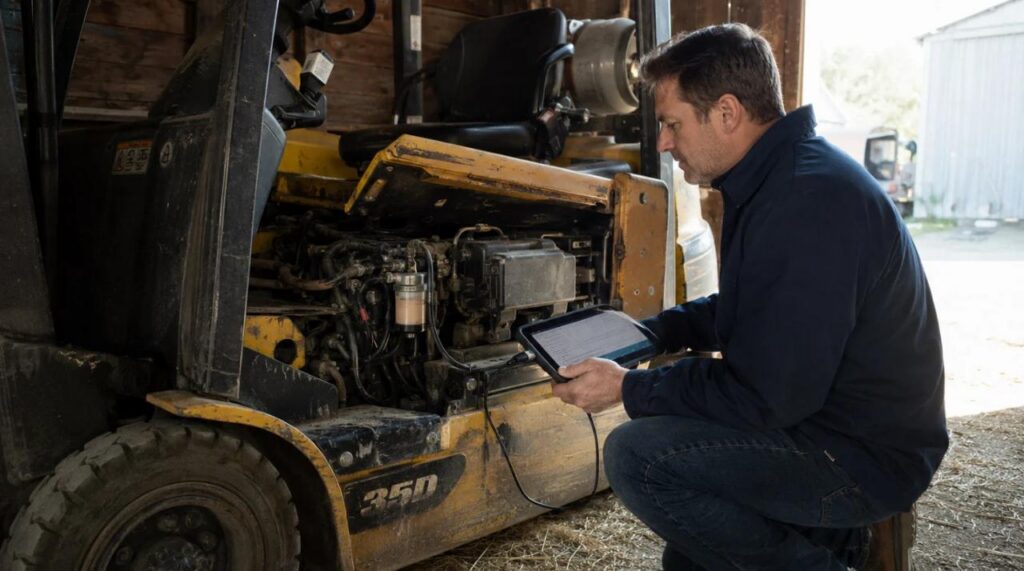
Commercial Liability Insurance: How GPS Telematics Verifies Heavy Equipment Theft Claims
Evaluating theft claims involving heavy construction equipment requires careful cross-referencing of physical site security and digital location logs. When a contractor reports the loss of high-value machinery from a job site, insurance adjusters review the security measures in place to determine liability. Processing a commercial liability insurance claim for stolen equipment has become more straightforward for investigators today, as modern fleet management systems and GPS tracking devices provide clear data regarding the exact movement and location of the missing property.
Reported Theft of a Commercial Forklift
A mid-sized construction company in Ohio was facing a temporary cash flow shortage due to delays in project completions and rising labor costs. To recover some capital, the business owner decided to file a fraudulent claim for an expensive diesel forklift valued at $45,000. The machine was fully covered under the company’s commercial equipment policy.
The owner arranged for the forklift to be loaded onto a flatbed trailer on a Friday evening after the subcontractors had left the site. The equipment was driven to a rural property owned by his brother, where it was concealed inside a private barn. On Monday morning, the owner notified the local police that the forklift had been stolen from the unmonitored construction site over the weekend. He then filed a formal theft claim with his insurance company, submitting the police report and the original equipment invoice to request a reimbursement check.
Reviewing Fleet Telematics
Why Was the Claim Audited?
The claims adjuster reviewed the construction site’s daily logs and noticed that the forklift was listed as active until the end of the day on Friday, but no broken locks or signs of forced entry were found at the perimeter fence. Additionally, an audit of the construction company’s financial records indicated a sudden increase in short-term business loans, which suggested financial difficulty.
The owner believed that because the job site lacked active night guards or working security cameras, the insurer would accept the police report as sufficient proof of theft and process the claim without checking the internal mechanisms of the machinery itself.
How Was the Fraud Discovered?
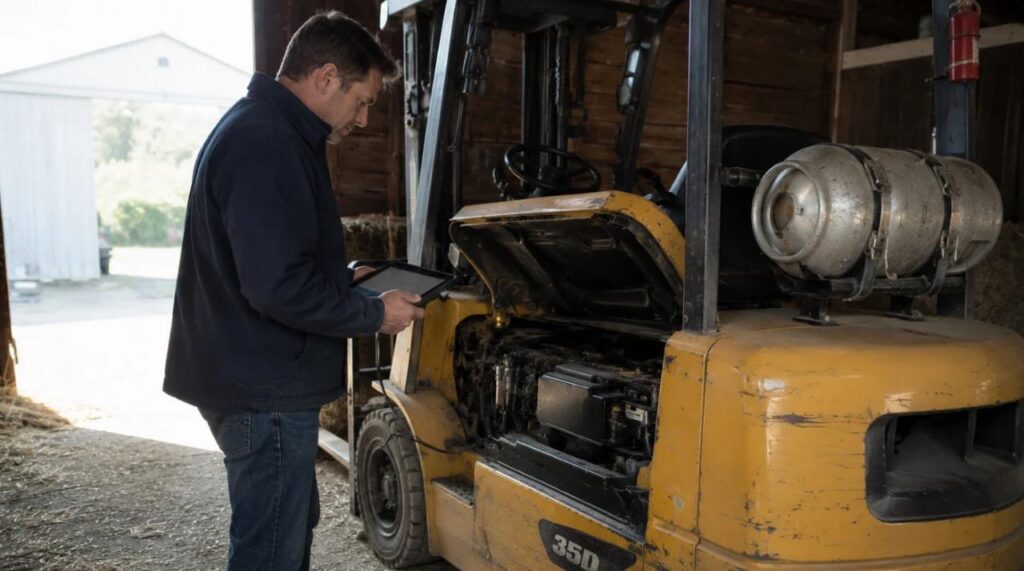
The insurance company’s special investigations unit contacted the manufacturer of the forklift to access the historical data from the factory-installed GPS telematics unit. Modern construction equipment is commonly built with hidden tracking devices to help companies manage their fleets and monitor engine hours.
The downloaded GPS report showed that the forklift’s engine was started on Friday evening using an authorized company key. The location tracking data mapped the exact route of the machine as it left the construction site and traveled thirty miles down the highway, stopping directly at the private property owned by the contractor’s brother. This precise method of verifying physical assets is standard practice in the industry; just as investigators review lock data during a commercial property insurance fraud case involving a warehouse break-in, liability adjusters use telematics to verify the location of commercial machinery.
Fleet Risk Management Expert Insight: “GPS tracking data provides a factual timeline in equipment claims. When the digital record shows a machine moving directly to a relative’s property while using a factory key, the claim cannot be approved.”
Asset Tracking in the Construction Industry
Analyzing equipment loss claims involves understanding equipment management standards and asset visibility trends:
- The Impact of Telematics on Insurance Fraud: Research from the International Journal of Construction Management shows that the widespread adoption of GPS and engine telematics has reduced heavy equipment fraud by over 40%, as insurers can easily verify claims using independent data servers.
- Behavioral Economics and Business Distress: Studies from the Journal of Business Risk indicate that equipment owners are more likely to attempt asset liquidation schemes when monthly equipment lease payments exceed the current revenue generated by the machinery.
Equipment Recovery and Policy Cancellation
How Does the Policy Apply?
Commercial insurance contracts contain a strict **Concealment, Misrepresentation, or Fraud Clause**. If an insured business owner intentionally misrepresents a material fact regarding a loss, the entire policy is voided. The insurance company is legally released from paying the claim and can cancel all other active policies held by the business.
The contractor’s claim was officially denied, and the forklift was recovered by law enforcement at the rural location. The case was referred to the state prosecutor, resulting in the owner being charged with insurance fraud and grand larceny. This legal framework is applied across all specialized insurance sectors when misrepresentation occurs. Whether a policyholder is concealing heavy machinery or staging an inventory loss during a complex travel insurance fraud investigation involving baggage scanner logs, the result remains the same: immediate denial, policy cancellation, and legal prosecution.
Key Terms to Know in Equipment Insurance:
- Inland Marine Coverage: A specialized type of property insurance that covers movable commercial assets, tools, and heavy equipment while they are transported or stored at various job sites.
- Material Misrepresentation: Providing false information that directly alters the underwriter’s evaluation of a claim, which legally invalidates the insurance contract.
Questions (FAQs)
1. Does standard business insurance cover stolen construction equipment?
No. Standard commercial property insurance usually covers items at a fixed location. Heavy machinery that moves between different job sites must be covered under an “Inland Marine Policy” or a specific commercial equipment floiter.
2. Can an insurance company deny a heavy equipment claim if the GPS was turned off?
If the policy states that working tracking devices are a condition of coverage, disabling the GPS can result in a denial. Investigators will also check if the power supply to the tracking unit was intentionally disconnected before the reported theft.
3. How do insurers find heavy equipment hidden inside buildings?
Modern GPS units utilize a combination of satellite tracking and cellular network signals. Even if the equipment is parked inside a barn or warehouse, the last recorded location and cellular pings will guide investigators to the exact property.
Conclusion
Operating a construction business requires strict administrative compliance and honest reporting during property losses. The GPS data analyzed in this forklift theft case shows that modern fleet technology makes faking equipment theft very difficult to accomplish. Attempting to manage business debts by fabricating a machinery loss will result in policy cancellation and criminal charges. Relying on accurate inventory logs and maintaining transparent commercial liability insurance practices is the only effective way to protect a company’s assets and reputation.


Pingback: Homeowners Property Insurance: Smart Thermostat Case Study
Pingback: Luxury Auto Insurance: Airbag Control Module Case Study