The Microchip Ghost: How Blockchain Bio-Tracking Busted a Luxury Pet Insurance Fraud
The premium veterinary care market has evolved into a multi-million dollar asset class, driving specialized underwriters to adopt advanced digital forensics and biometric tracking to secure high-value animal policies. Imagine submitting a catastrophic loss claim for a rare, cloned Tibetan Mastiff valued at $150,000, asserting that the animal suffered fatal acute toxicity from an accidental chemical ingestion. For elite breeder Victoria Vance, this tragic domestic loss justified an immediate, massive indemnity payout. However, claims adjusters soon proved that investigating modern pet insurance fraud setups requires looking deep into bio-digital tracking arrays, as what was documented as a heartbreaking veterinary death was completely exposed as a calculated double-recovery conspiracy.
The Timeline of a Fabricated Canine Fatality
The financial manipulation began when Victoria Vance experienced severe cash flow deficits within her premium canine breeding facility. Facing high operational debts, Vance realized that her prize Tibetan Mastiff was costing more to maintain than its projected seasonal breeding revenues. She devised a high-yield liquidation scheme to collect the massive locked-in agreed value of the dog’s insurance policy while secretly keeping the valuable genetic asset alive.
Vance coordinated with a corrupt, out-of-state veterinary practitioner to falsify an official medical death certificate, claiming the Mastiff succumbed to sudden organ failure. To make the file unchallengeable, they presented ash remains from a generic commercial animal crematorium as physical proof of disposal. Vance then submitted the fatal claim documents to her premium carrier. With the paperwork processed, she quietly transported the live, highly valuable dog across state lines under a falsified name, selling him to an unmonitored private collector in Texas for an additional $90,000 in cash, fully believing the insurance company would never track a deceased, cremated animal.
The Anatomy of an RFID and Ledger Audit
Why Did the High-Value Asset Deception Happen?
The fraud targeted a classic administrative vulnerability in the veterinary claims system: the historical reliance on signed paper medical certificates and unverified cremation logs for overseas or out-of-state animal deaths. Vance assumed that once a licensed veterinarian signs a death document and ashes are provided, the insurance company lacks any physical or biological means to independently verify the identity of the cremated matter.
The financial objective was to achieve a total dual-monetization of the animal—draining $150,000 from the insurance policy limits while simultaneously pocketing $90,000 from the underground luxury pet market.
How Was the Fraud Investigated and Uncovered?
Specialized risk adjusters did not just accept the veterinary signatures; they initiated an audit through a newly deployed decentralized framework known as **Blockchain Veterinary Records**. This system permanently locks every medical checkup, vaccination timestamp, and clinic entry into an immutable digital ledger that cannot be altered or overwritten by a corrupt practitioner.
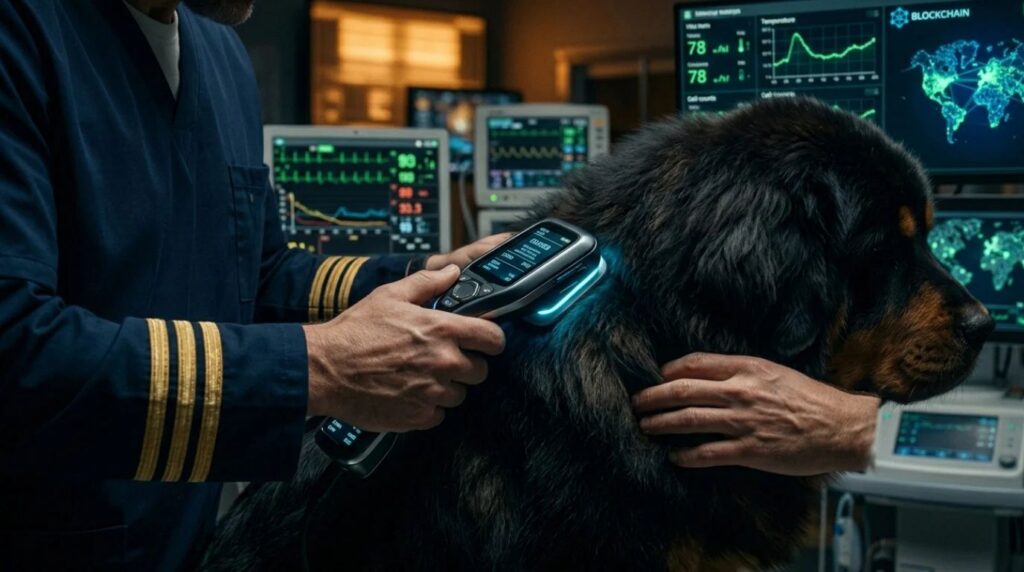
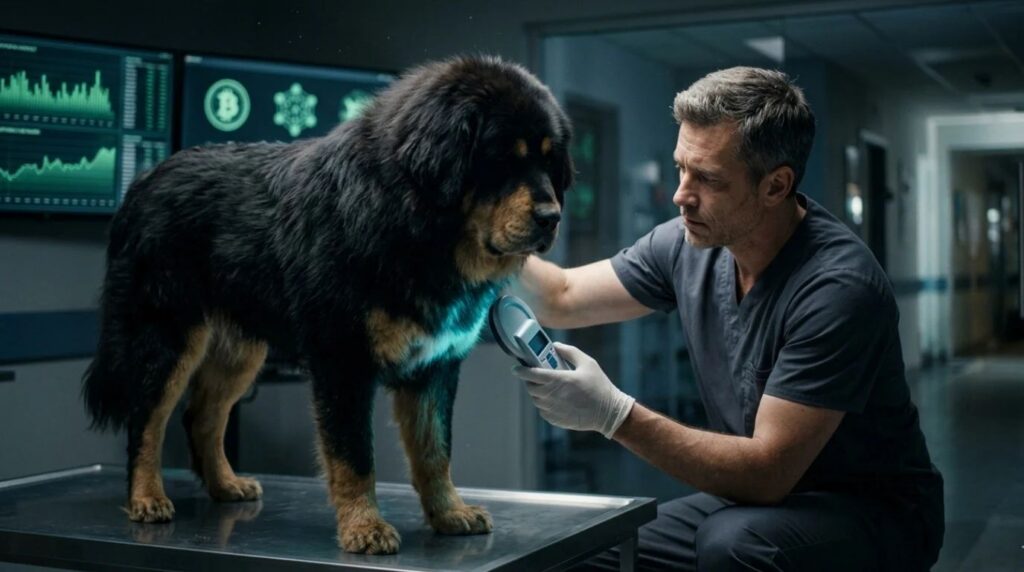
Investigators discovered a severe digital anomaly: the cryptographic signature of the veterinarian who signed the death certificate did not align with the historical, blockchain-verified checkup logs of that specific clinic. Acting on this protocol alert, specialized field investigators deployed an automated **Radio-Frequency Identification (RFID) network scan**. Every insured premium animal is legally required to carry a subcutaneous microchip with a unique, unalterable digital serial number. Investigators tracked a global database alert when a luxury veterinary hospital in Houston, Texas, scanned a newly purchased Tibetan Mastiff for a routine health checkup. The scanned microchip readouts matched Vance’s supposedly cremated dog perfectly. This deep integration of digital data and physical asset tracking is a standard operational requirement across advanced lines; just as cyber adjusters trace system trails during a personal cyber insurance homeowners fridge ransom case, pet underwriters utilize biometric and RFID data to uncover property manipulation.
Chief Bio-Forensic Claims Director Insight: “A fraudster can forge a death certificate, pay off a local clinic, and cremate decoy tissue to create a paper trail. But they cannot change the unique digital ID embedded in an active subcutaneous microchip. The RFID network turns an animal’s biological identity into an absolute, unalterable legal fact.”
Blockchain Integrity and Moral Hazard in Specialized Asset Protection
To fully grasp how modern biometric data exposes elite property scams, we must look at the academic data governing cryptographic tracking and behavioral economics:
- The Immutability of Decentralized Health Ledgers: Research published in the Journal of Medical and Veterinary Cybernetics establishes that integrating electronic health records onto a blockchain architecture entirely eliminates internal white-collar collusion, as any retroactive alteration of data alters the cryptographic hash, alerting fraud systems instantly.
- The Valuation Disconnect in Alternative Assets: An economic study from the Wharton School of Business outlines that alternative high-value assets (such as exotic pets or fine art) experience extreme moral hazard volatility when their real-world market liquidity drops below the face value of their locked insurance contracts.
The Finality of Intentional Asset Concealment
How Does the System Work?
Under specialized property endorsement frameworks and animal mortality insurance laws, fabricating the death of an insured asset to claim financial indemnity constitutes a major criminal offense. The moment forensic data or RFID tracking proves a deliberate concealment, the carrier invokes the **Concealment and Fraud Clause**, completely invalidating the entire contract from its inception and launching immediate civil litigation to recover all corporate investigative overhead.
Victoria Vance’s premium pet protection plan was permanently revoked, her current claims were rejected, and she was arrested by federal authorities for multi-state wire fraud, grand larceny, and conspiracy. This strict legal outcome applies across all insurance sectors whenever an asset is intentionally manipulated for financial gain. Whether a claimant is faking the death of a luxury animal or fabricating physical injuries during a highly contested workers comp scam investigation involving social media tracking, the systemic consequence remains absolute: total loss of legal protection, complete asset forfeiture, and direct criminal prosecution.
Key Legal Clauses in High-Value Animal Insurance:
- All-Risks Mortality Coverage: Protects exclusively against accidental death, natural illness, or humanitarian euthanasia executed by a licensed professional due to severe, incurable physical trauma.
- The Microchip Maintenance Warranty: A strict contractual rule stating that the owner must ensure the subcutaneous RFID chip remains active, uncompromised, and continuously registered. Any unauthorized removal or tampering completely voids the policy’s legal validity.
Questions (FAQs)
1. Does standard pet insurance cover expensive show dogs or cloned animals?
No. Standard pet insurance is designed for routine veterinary expenses like accidents and illnesses. High-value show animals, exotic breeds, and cloned pets require a highly specialized “Equine and Exotic Animal Mortality Policy” with an agreed-value endorsement.
2. How do insurance companies use blockchain to investigate pet insurance fraud?
Insurers connect to decentralized veterinary networks where every medical procedure, microchip scan, and health record is permanently time-stamped. This prevents clinics or owners from altering records after a claim is filed.
3. What happens if an owner removes an insurance-registered microchip?
Tampering with or removing a registered subcutaneous microchip without an urgent, documented medical reason from an authorized veterinary surgeon constitutes a material breach of warranty, immediately voiding all coverage.
Conclusion
Managing high-value living assets demands absolute administrative transparency, continuous regulatory compliance, and total honesty with your underwriting partners. The technological exposure of the Tibetan Mastiff double-recovery conspiracy delivers an absolute warning to the luxury market: decentralized databases and worldwide RFID networks have made property deception completely transparent. Attempting to generate illicit capital by fabricating a veterinary tragedy is a definitive path to criminal prosecution and total professional ruin. Safeguarding your investments through legitimate risk scheduling and accurate pet insurance fraud prevention standards is the only way to preserve your professional brand and your personal freedom.